How to Blend Hot Soup Safely (Without the Lid Blowing Off)
The soup is done, it smells great, and the only thing left is the step that worries people: pouring it, still steaming, into a countertop blender. Most blowouts come from trapped steam.
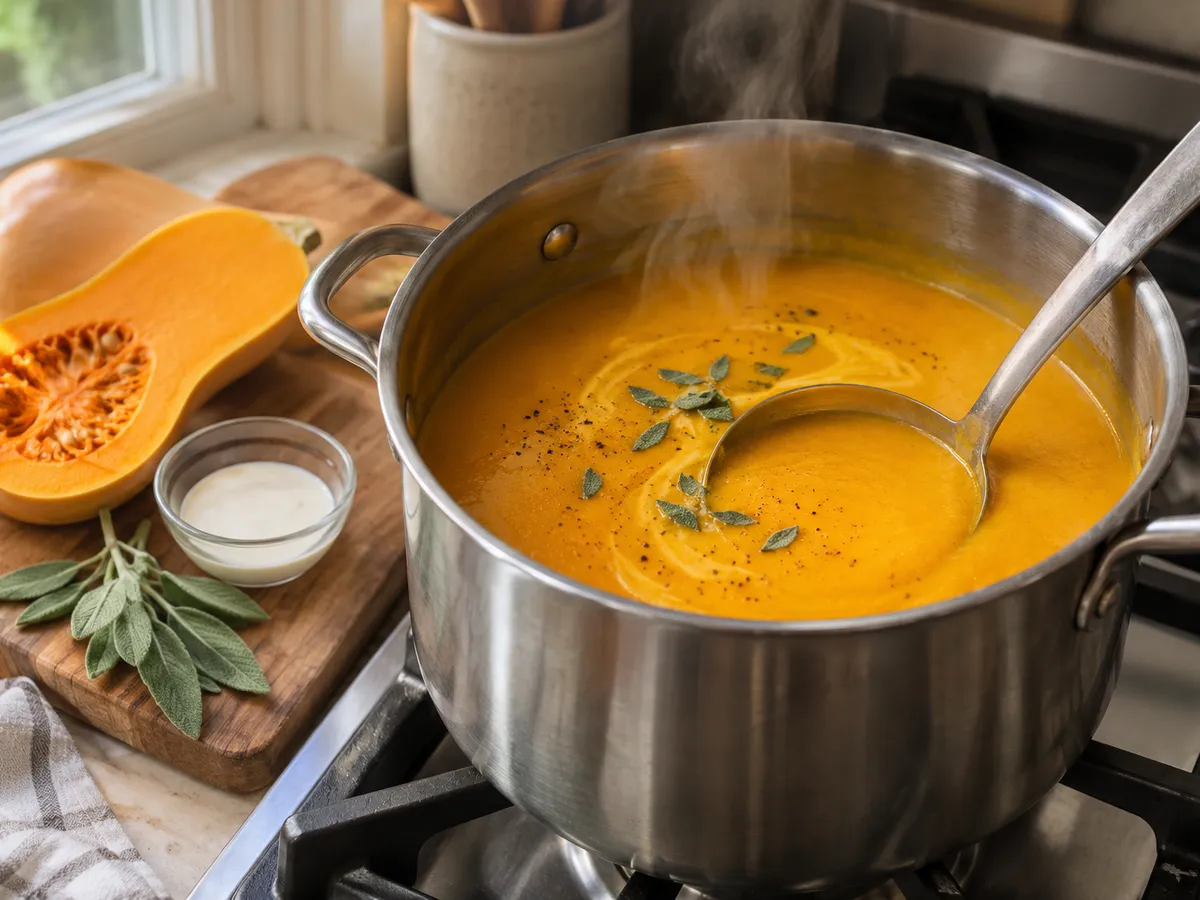
If you want to know how to blend hot soup safely, start with what the soup is doing when it hits the jar. Hot soup keeps giving off steam. Once the blades spin, that steam is released much faster, and in a sealed jar it has nowhere to go but up, taking the lid and some scalding soup with it. The fixes below give the steam room and an exit, or skip the countertop blender entirely.
Why hot soup can blow the lid off
Serious Eats explains that the spinning blades create a vortex that releases steam much faster than soup sitting in a pot, and they also throw liquid up the sides of the jar. If the lid traps that steam, pressure builds above the soup and can push the lid up. Blender makers say the same thing in their manuals. KitchenAid's stand blender guide warns that hot liquid poured into the blender "can be ejected out of the appliance due to a sudden steaming." Vitamix manuals warn that spray or escaping steam may cause scalding and burns.
| Cause | What happens | Fix |
|---|---|---|
| Soup still at a hard boil | Lots of steam the moment the blades start | Let it settle off the heat for a few minutes |
| Jar filled too high | No headroom for steam or the surge of liquid | Fill no more than halfway and work in batches |
| Lid fully sealed | Pressure has no way out except under the lid | Vent the lid the way your manual says |
| Starting on high | The soup surges up and steam is released all at once | Start on the lowest speed, then ramp up |
| Wrong container | Small sealed cups trap heat and pressure | Use only the full-size jar for hot food |
6 ways to blend hot soup safely before you buy anything
- Take the pot off the heat and let it settle. Serious Eats suggests letting soup that is still bubbling hard cool somewhat before you move it.
- Fill the jar halfway or less. Work in batches. Serious Eats puts the limit at no more than half, and Vitamix manuals say not to fill the container to maximum capacity with hot liquids. Pour each blended batch into a clean pot or bowl.
- Give the steam a way out. On many countertop blenders that means seating the lid securely, removing the small center cap, and laying a folded kitchen towel loosely over the opening. Hold the lid steady through the towel and keep your hand clear of the vent. Check your manual first: KitchenAid's stand blender guides say the lid center cap stays in place for hot liquids, and Vitamix says to keep its two-part lid and lid plug in place. Follow the setup your blender specifies.
- Start on the lowest speed. KitchenAid says to always start on the lowest speed and slowly ramp up when blending hot liquids. Vitamix says to begin on variable speed 1. Once the soup is moving, turn the speed up slowly.
- Use only the big jar. KitchenAid says not to blend hot liquids in its personal jar, and Vitamix says not to blend hot liquids in its small cups.
- Let the blades stop before opening. Wait until the blades have stopped completely, then lift the lid away from your face.
No blender at all? Make it smooth by hand
For a rustic texture without moving hot soup anywhere:
- Potato masher. Mash right in the pot off the heat. Works well for potato, bean, lentil and squash soups.
- Food mill. Crank the cooked vegetables through it into a bowl; skins and seeds stay behind.
- Fine sieve. Press soft vegetables through a sieve with the back of a ladle for a smooth puree.
- Whisk. For very soft, well-cooked vegetables, a vigorous whisk breaks them down into a thicker, creamier soup.
Watch the short
This short shows the pour-it-into-the-blender problem and the switch to an immersion blender covered below. Some scenes were made with AI.
One tool option: an immersion blender
If you make pureed soups often, an immersion blender skips the transfer step. You blend in the pot, with no sealed jar and no hot batches to carry. The one in the video is the Turelar 1100W 5-in-1 immersion blender set (#ad). Its listing describes an 1100-watt motor, a variable speed trigger, a nylon blade guard meant to protect pots from scratches, and swap-on attachments: a food chopper, a whisk and a milk frother. It has a 4.5-star average from more than 8,400 ratings.
Use an immersion blender safely too
Vitamix's immersion blender manual gives rules that apply to any stick blender:
- Take the pot off the heat. Remove the saucepan from the heat source and make sure the liquid is not boiling.
- Keep the pot half full or less. The manual says the container should be half full or less when blending liquids or making a puree.
- Start low. With hot ingredients, start on low speed and increase gradually to avoid splattering.
- Keep the blade under the surface. Lifting it out while it runs throws soup. Serious Eats also suggests keeping the blade submerged.
The honest catch, from buyer reviews: Amazon's review summary says many buyers praise the power and value, but durability comes up often, with some saying it broke after about six months. One reviewer notes the motor section should only be wiped with a damp cloth, not washed. Check today's price on Amazon.
Common mistakes
- Blending soup straight from a rolling boil. That is when steam is strongest.
- Filling the jar to the top to save time. One big batch is the one most likely to blow the lid.
- Pressing a bare palm on the lid. Hold it through a folded towel and keep your hand off the vent.
- Using a single-serve cup or bullet blender. Many are sealed and are not meant for hot liquids.
Frequently asked questions
Is it safe to blend hot soup in a blender?
Yes, if you follow your blender's instructions. Use only the full-size jar, fill it halfway or less, give the steam a way to escape the way your manual describes, and start on the lowest speed. The danger comes from steam trapped under a sealed lid, which can force the lid off.
Do you need to let soup cool before blending?
It does not need to be cold. Take the pot off the heat and let it stop bubbling for a few minutes so it is no longer at a boil. That reduces the burst of steam when the blades start.
Can I blend hot soup in a plastic blender?
Only if the jar is rated for hot liquids, which your manual will say. Many sealed personal blender cups are not, and both KitchenAid and Vitamix say not to blend hot liquids in their small cups or jars.
How do I blend soup without a blender?
Use a potato masher in the pot for a rustic texture, push the soup through a food mill or fine sieve for a smoother one, or whisk very soft vegetables hard. An immersion blender is the easiest tool if you puree soup often.
Sources
- Serious Eats: why hot soup can blow the lid off a blender
- KitchenAid stand blender product guide (hot liquids warning)
- KitchenAid stand blender product guide (hot liquids, full-size jar only)
- Vitamix 5200 owner's manual
- Vitamix Ascent A2300 and A2500 owner's manual
- Vitamix immersion blender owner's manual
Checked November 11, 2026. Product details are from the Amazon listing and its customer reviews; we have not tested this immersion blender ourselves.