Small Kitchen Tools That Earn Their Drawer Space
Most gadget drawers are full of things used once. Here is how to decide what stays, and a few small tools that do one job well.
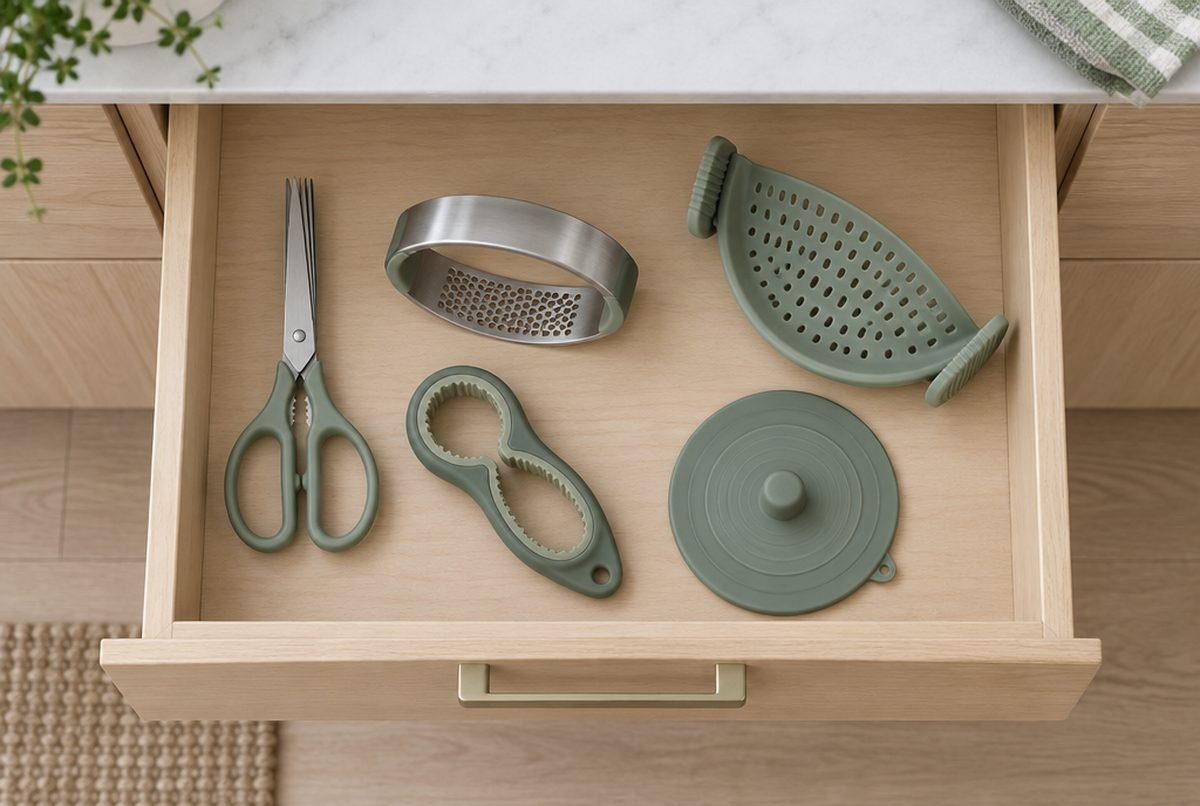
Kitchen drawers fill up with single-use tools that seemed clever in a video. A small tool earns its place only if it is used often, saves real time or effort, and is easy to clean. This guide gives you a simple way to judge tools, a drawer layout that works in small kitchens, and the basics every kitchen drawer should have before any gadget.
Start by emptying the gadget drawer
Take everything out and sort it into three piles: used this month, used this year, and can't remember. The last pile is usually the biggest.
Anything you have not touched in a year and that a knife or a fork can replace is a good candidate to donate.
The test a small tool has to pass
A small tool earns its spot when it replaces a slower step you repeat every week, cleans up in under a minute, and fits in a drawer without blocking anything else.
If a tool needs its own cabinet, a manual you have to look up, or more washing than the job it saves, it rarely gets used.
Herbs and garlic without the cutting board mess
Chopping herbs and mincing garlic are small jobs that make a big mess. Multi-blade herb scissors cut green onions and basil straight over the pan, and a garlic rocker presses a clove with a few rocks of the hand.
Both rinse quickly, and neither needs to be plugged in.
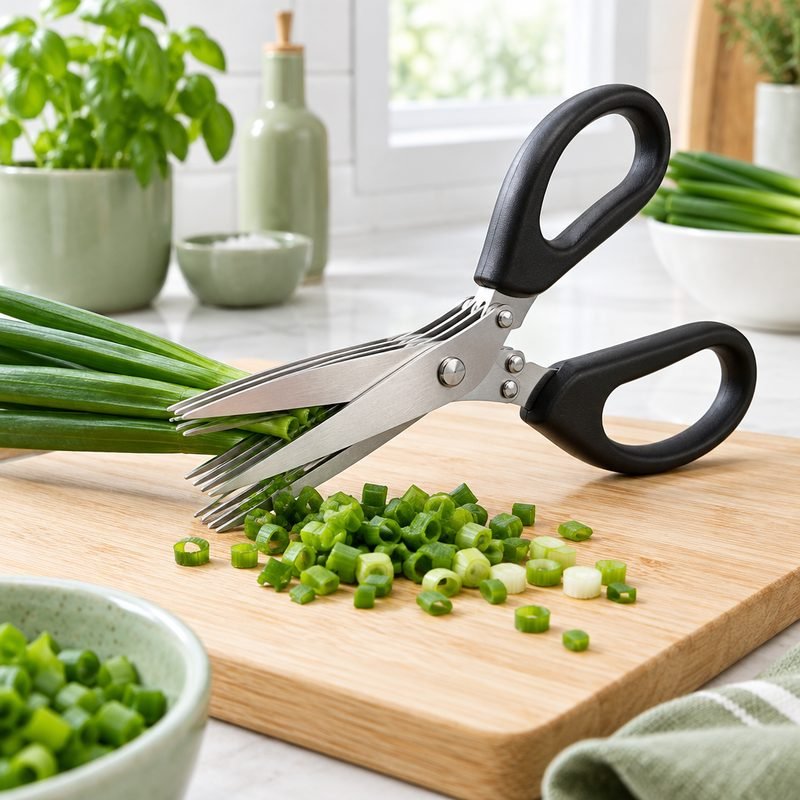
Five blades cut green onions, basil and other herbs into thin strips in one snip.
View on Amazon Add to Amazon cart 🛒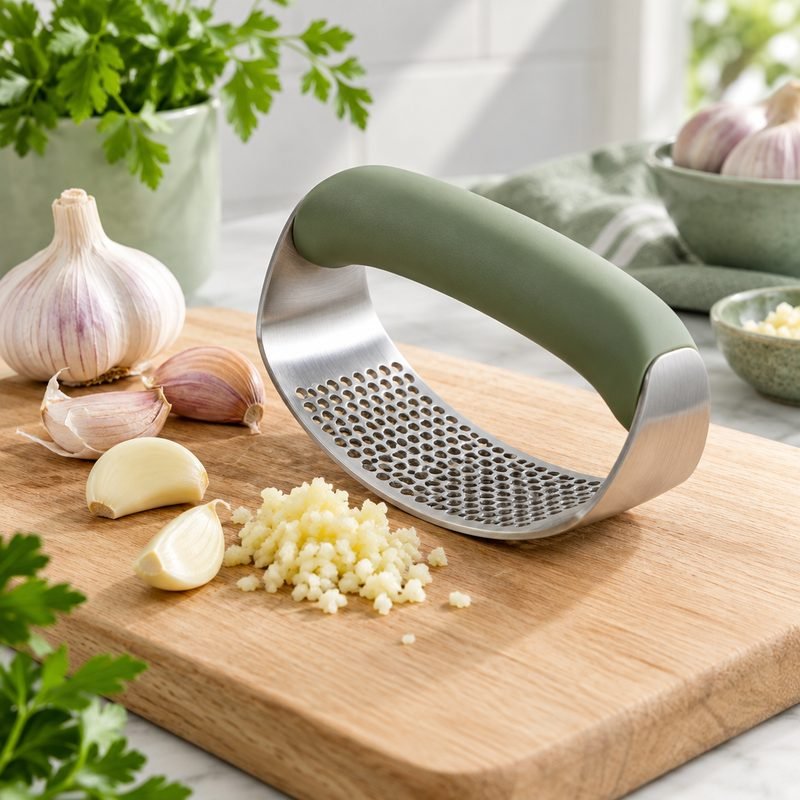
A curved stainless steel press you rock over a clove instead of mincing with a knife.
View on Amazon Add to Amazon cart 🛒Draining and spinning
A full colander takes up sink space and one more thing to wash. A clip-on strainer attaches to the pot rim and folds flat in a drawer.
For salad, wet leaves make dressing slide off. A salad spinner dries them in a few seconds; check the bowl diameter against your cabinet before buying, because spinners are bulky.
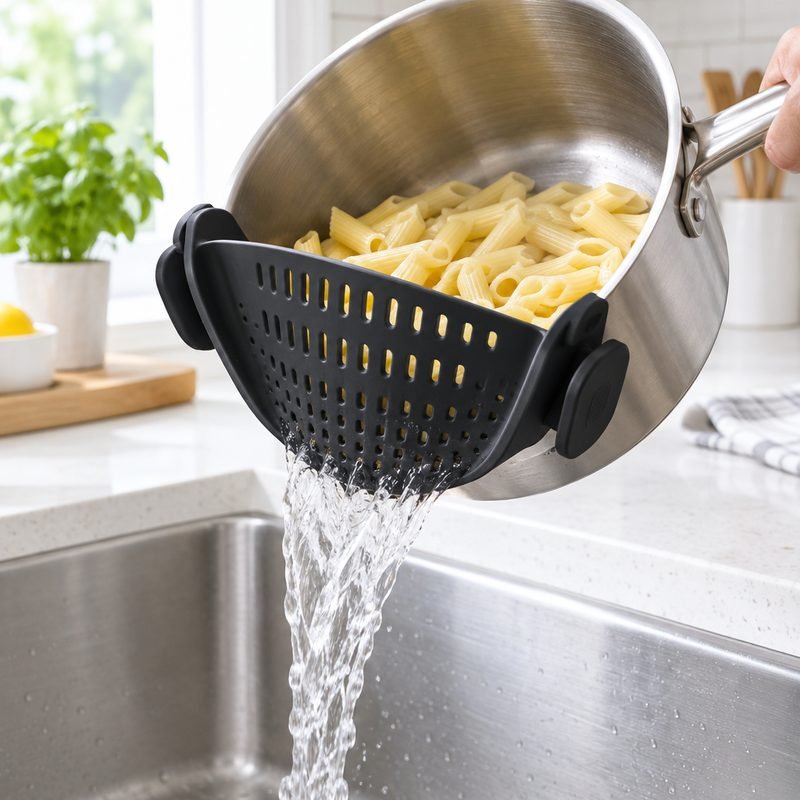
A silicone strainer that clips to the rim of a pot so you can drain pasta without a colander.
View on Amazon Add to Amazon cart 🛒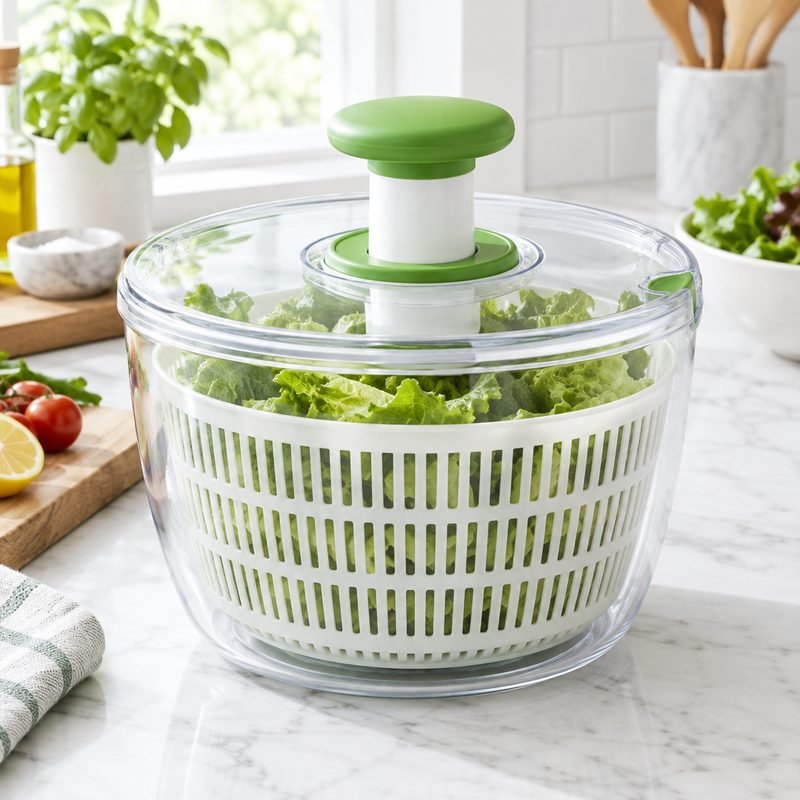
Press the pump on the lid to spin washed greens dry before they go into the bowl.
View on Amazon Add to Amazon cart 🛒Lids, jars and the microwave
Stuck jar lids are a common reason people put off cooking with what is already in the pantry. A long-handled jar opener adds leverage when grip strength is low.
Silicone splatter lids sit on top of bowls in the microwave, so you wipe the turntable less often. Look for vents and a size that fits your most-used bowl.
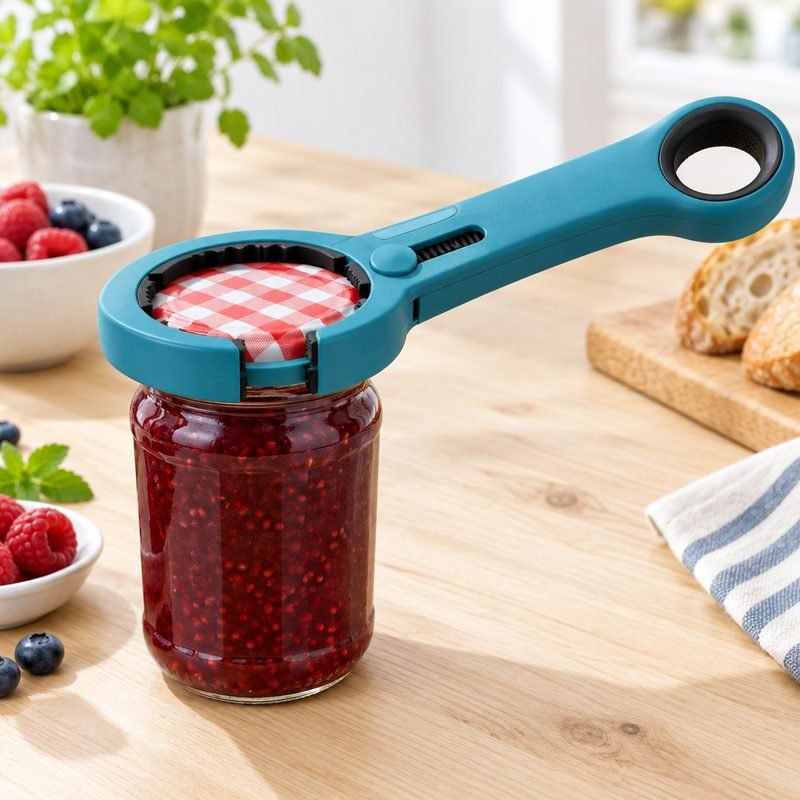
A long-handled opener that grips stuck jar and bottle lids so you need less grip strength.
View on Amazon Add to Amazon cart 🛒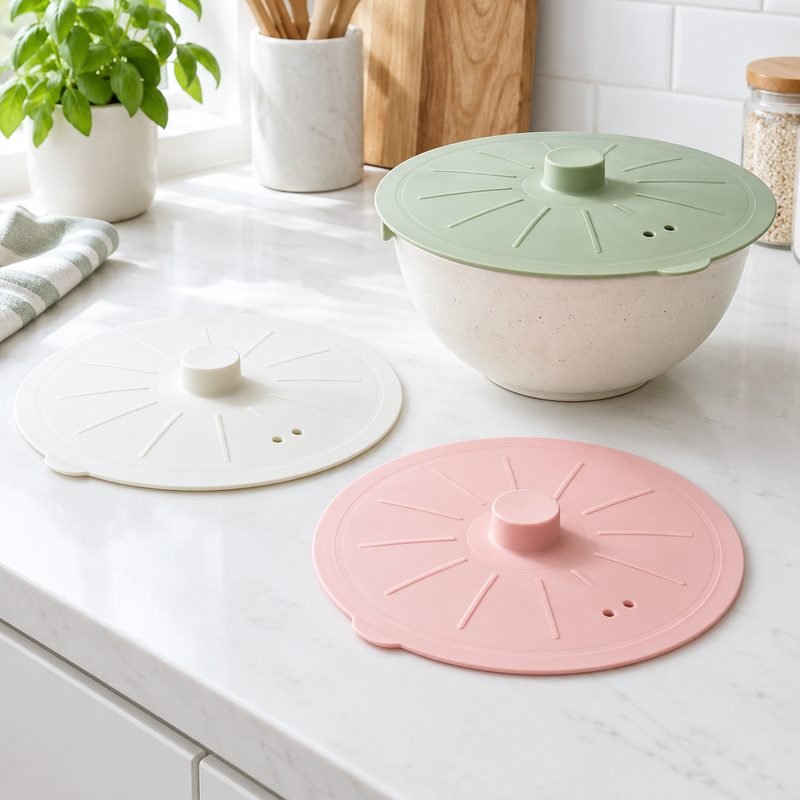
Vented silicone covers that sit on bowls in the microwave to keep splatter off the walls.
View on Amazon Add to Amazon cart 🛒Keep the drawer from filling up again
Give each tool a fixed spot, and use a one-in, one-out rule for anything new.
Every few months, repeat the three-pile test. If a tool lands in the can't-remember pile twice, let it go.
The basics come first
Before buying any specialty tool, make sure the drawer has the essentials most recipes rely on:
- A sharp chef's knife and a paring knife (stored with blade guards or in a block)
- A cutting board that fits your sink for washing
- Measuring cups and spoons
- A heat-safe spatula, a wooden spoon and tongs
- A vegetable peeler and a can opener
- A whisk and a ladle
Score a tool before it goes in the drawer
| Question | Keep it | Rethink it |
|---|---|---|
| Used at least weekly? | Yes | Only for one recipe a year |
| Easy to wash? | Dishwasher safe or one piece | Many small parts or hard-to-reach corners |
| Replaces something? | Does a job better than your knife or pan | Duplicates a tool you already like |
| Stores small? | Fits a drawer or hangs | Needs its own shelf |
A drawer layout for small kitchens
- Top drawer by the stove: spatula, spoon, tongs, ladle and whisk.
- Drawer by the prep area: peeler, herb scissors, garlic tool, measuring spoons.
- Lower or deeper drawer: salad spinner, strainer and bulky items.
- Use dividers so tools do not pile up, and keep sharp items in a separate slot or with guards.
Care tips that make tools last
- Dry metal tools right away to avoid rust spots.
- Do not put wooden tools in the dishwasher; wash by hand and oil them occasionally.
- Replace silicone tools that crack or hold odors.
- Clean herb scissors and garlic tools right after use, before food dries on them.
Frequently asked questions
How many utensils does a small kitchen need?
Fewer than most people own. One of each basic tool is enough for most households, plus a few gadgets you truly use weekly.
Are herb scissors worth it?
If you cook with fresh herbs often, they save time and keep the cutting board clean. If not, a knife is fine.
What is the best way to store a salad spinner?
Nest the basket inside the bowl with the lid on top, and store it in a deep drawer or low cabinet.