How to Declutter a Kitchen Junk Drawer in 20 Minutes
Every kitchen has one drawer that eats batteries, takeout menus and mystery keys. Here is a short, repeatable way to reset it.
A junk drawer is not a failure. It is a sign that a kitchen needs one spot for small, useful things that do not fit anywhere else. The trouble starts when the drawer has no rules. This guide gives you a 20-minute reset, a list of what usually belongs there, and simple habits that keep it from filling up again.
Set a timer and empty everything
Give yourself twenty minutes. Lay a towel on the counter and empty the drawer completely onto it, then wipe the inside of the drawer with a damp cloth.
Starting from an empty drawer matters. When you sort around items that never left, the same clutter quietly stays.
Sort into four piles
Make four piles: keep in this drawer, belongs somewhere else, donate, and trash. Expired coupons, dead pens, dried-out rubber bands and duplicate takeout menus go straight to trash.
Things that belong in another room, such as tools or chargers, go into a bag you carry around the house when you finish. Do not put them back 'for now'.
Decide what this drawer is for
A junk drawer works best with a job, not a ban. Pick the few categories you actually reach for in the kitchen: scissors, tape, pens, batteries, twist ties, a small flashlight, spare keys.
Anything that does not fit those categories needs a different home. If you cannot name its home, it is probably a donate or trash item.
Divide the drawer into zones
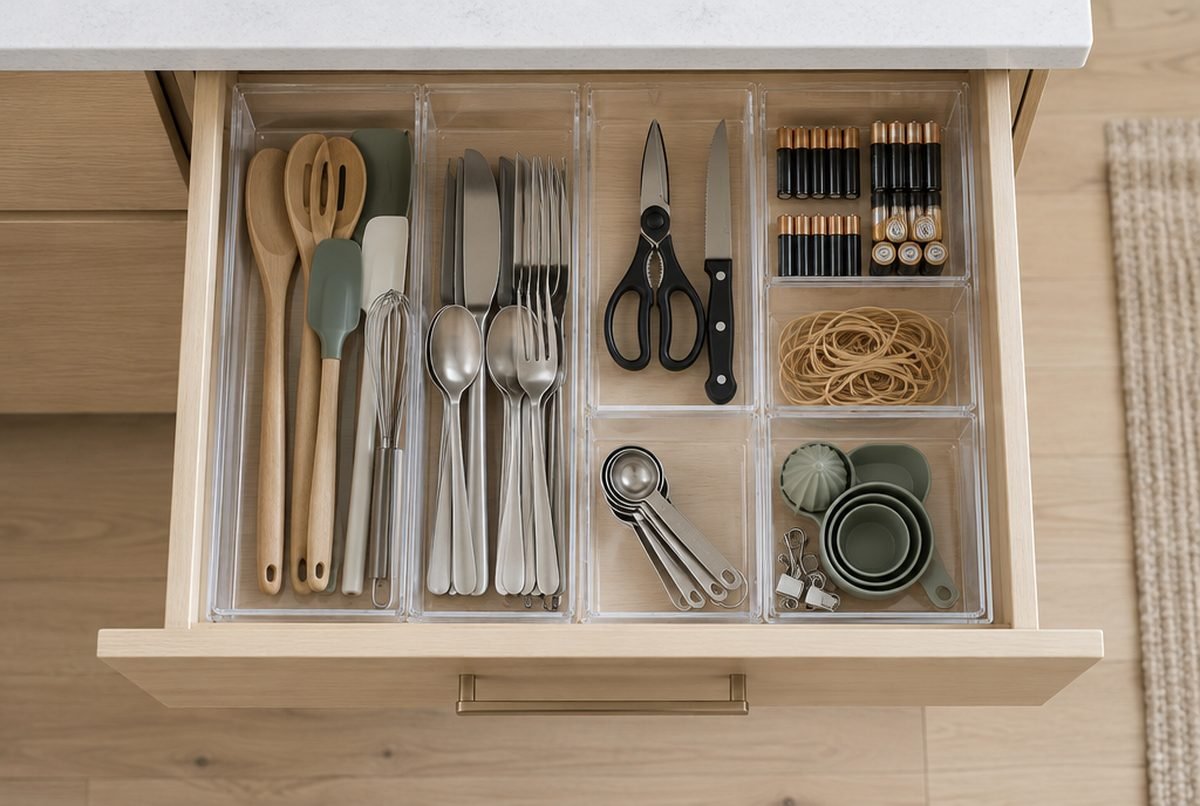
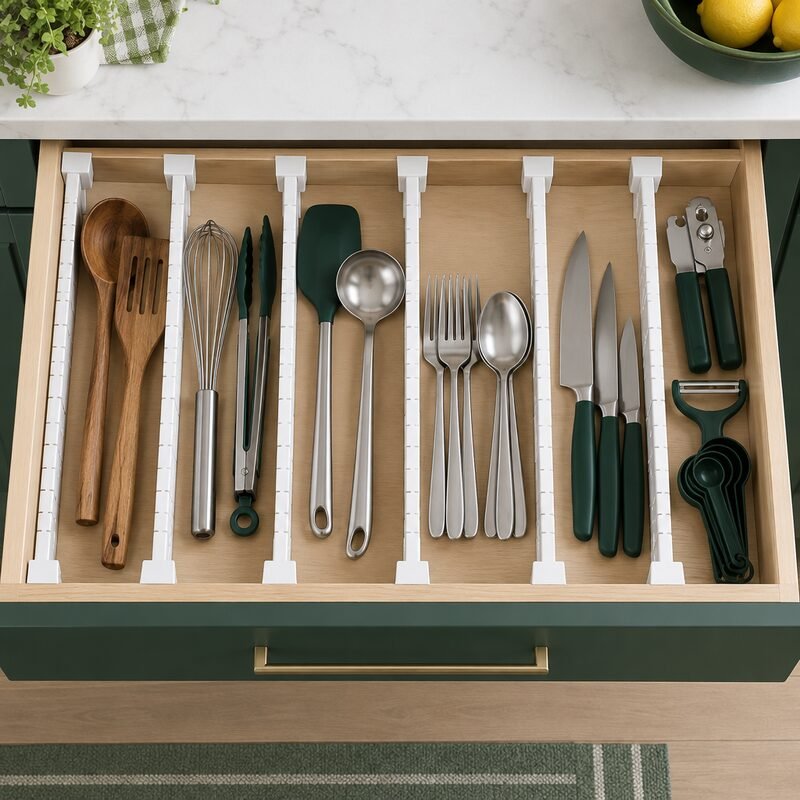
Small loose items are what make a drawer messy. Clear dividers in mixed sizes give each category its own spot, and you can see when something runs low.
Put the items you use most at the front, and longer things like scissors along the side. Leave one small empty box as an overflow spot so the rest stays tidy.
Four tray sizes that tile together, so a shallow junk drawer gets a place for every small item.
View on Amazon Add to Amazon cart 🛒Keep it from filling up again
Use a one-in, one-out rule: when a new item goes in, something leaves. Once a month, take two minutes to pull out anything that crept in.
If one category keeps overflowing, such as batteries or charging cables, give it its own container somewhere else so the drawer keeps working.
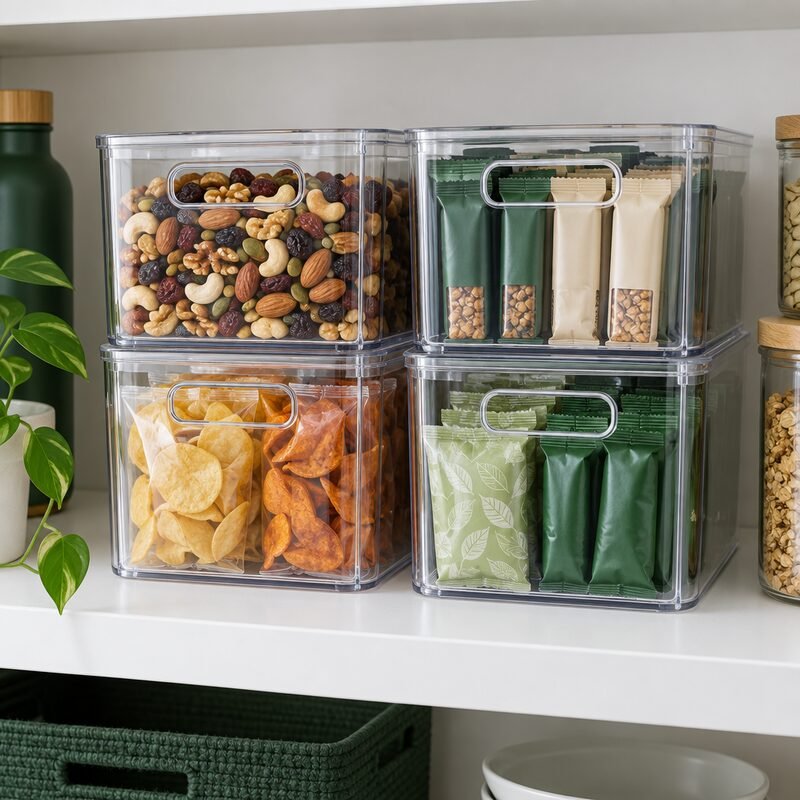
A mix of sizes for snacks, packets and produce. Clear walls show what is running low.
View on Amazon Add to Amazon cart 🛒What usually belongs in a kitchen junk drawer
| Keep | Move elsewhere | Usually trash |
|---|---|---|
| Scissors, tape, a few pens | Tools and screwdrivers (to a toolbox) | Dead pens and dried markers |
| Batteries in one small box | Chargers and cables (to a charging spot) | Expired coupons and old receipts |
| Twist ties, rubber bands, bag clips | Spare keys you cannot identify (test, then decide) | Duplicate takeout menus |
| A small flashlight | Warranty papers (to a folder) | Broken items waiting for repair for a year |
A sample layout for a standard drawer
- Front row: what you grab most: scissors, pens, tape.
- Middle: bag clips, rubber bands, twist ties in small trays.
- Back: batteries, spare keys and the flashlight.
- One empty tray: overflow spot for new items until you decide where they go.
Measure the inside of the drawer floor before you buy dividers, and subtract a little for the drawer's curved corners. Trays that tile together without gaps are less likely to slide around.
Battery safety
Loose batteries touching keys, coins or each other can short and heat up. Keep them in their original packaging or a small closed box, and tape the ends of 9-volt and lithium coin batteries before recycling them. Check your city or county website for battery drop-off locations.
If you have more than one junk drawer
Give each drawer a single job, such as "office", "kitchen tools" or "hardware". A drawer with a clear purpose is easy to put things back into. When everyone in the household knows the rule, the drawer stays usable.
Frequently asked questions
How often should I clean out the junk drawer?
A two-minute tidy once a month and a full 20-minute reset every few months is enough for most households.
What is the best organizer for a junk drawer?
Clear trays in several sizes are the most flexible, because you can rearrange them as your needs change and see everything at a glance.
Should I label the trays?
Labels help other people in the house put things back. Even a small piece of tape with one word works.