How to Store Pots and Pans in a Small Kitchen
Stop the clatter every time you need a skillet. Ways to store cookware upright, nested or hung, and how to keep lids under control.
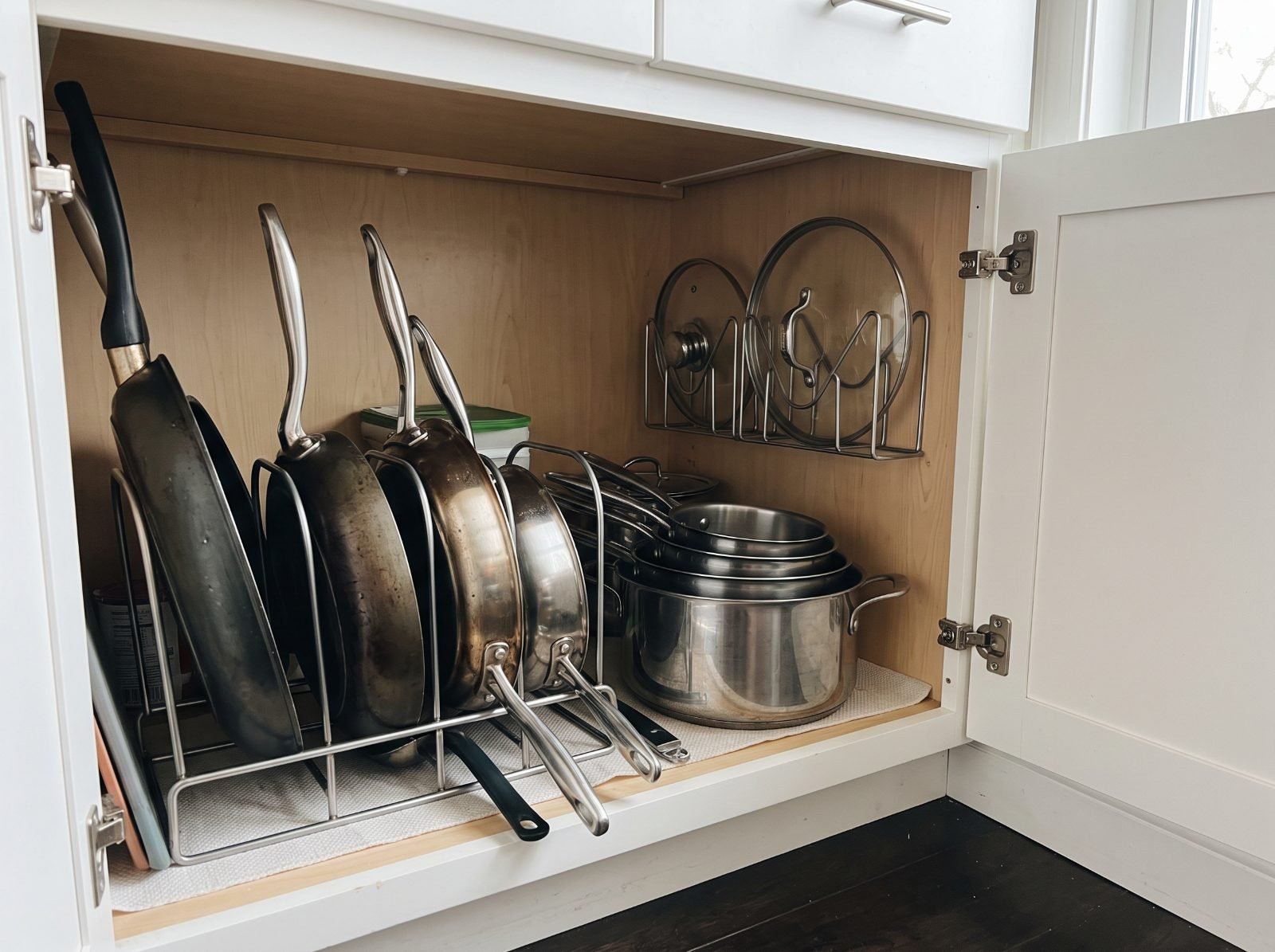
Quick answer: To store pots and pans in a small kitchen, keep only the pieces you use each week, stand skillets upright in a rack like files, nest pots largest-first with a protector between nonstick pieces, move lids to a door rack or divider, and add a shelf riser so the cabinet height is not wasted. Put everything in the cabinet closest to the stove.
Pots and pans are some of the bulkiest things in a kitchen, and the usual method of stacking them in a deep cabinet means you lift four pans to reach the one at the bottom. A few changes make every piece reachable in one move, which matters most in small kitchens where cabinet space is limited.
How to store pots and pans in a small kitchen, step by step
- Empty the cabinet and keep only the pieces you used in the last month.
- Measure the cabinet width, depth and the height between shelves before buying any organizer.
- Stand skillets and sheet pans on edge in a rack or between tension rods.
- Nest pots by size, largest at the bottom, with a soft protector between nonstick pieces.
- Store lids separately: on the inside of the door or upright in a divider.
- Add a cabinet shelf riser for small pans so the top half of the cabinet is used.
- Keep the pan you reach for most at the front, closest to the stove.
Start by editing your cookware
Pull everything out and count what you actually use. Most small households cook almost everything with a handful of pieces:
- One large and one small skillet
- A medium saucepan with a lid
- A large pot for pasta, soup or stock
- A sheet pan, and a baking dish if you bake
- Specialty pans (wok, grill pan, Dutch oven) only if used regularly
Pieces with warped bottoms, peeling nonstick coating or loose handles are good candidates to replace or recycle.
Three ways to store them
| Method | Best for | Tip |
|---|---|---|
| Upright in a rack | Skillets and flat pans in a lower cabinet | Like files: pull one out without moving the others |
| Nested | Pots and saucepans | Largest on the bottom; put a pan protector or paper towel between nonstick pieces |
| Hanging | Kitchens with wall space | A rail or pot rack frees cabinets but needs secure mounting |
If your pans are stacked in one tall pile, a tiered rack is the quickest fix: each pan sits on its own shelf.
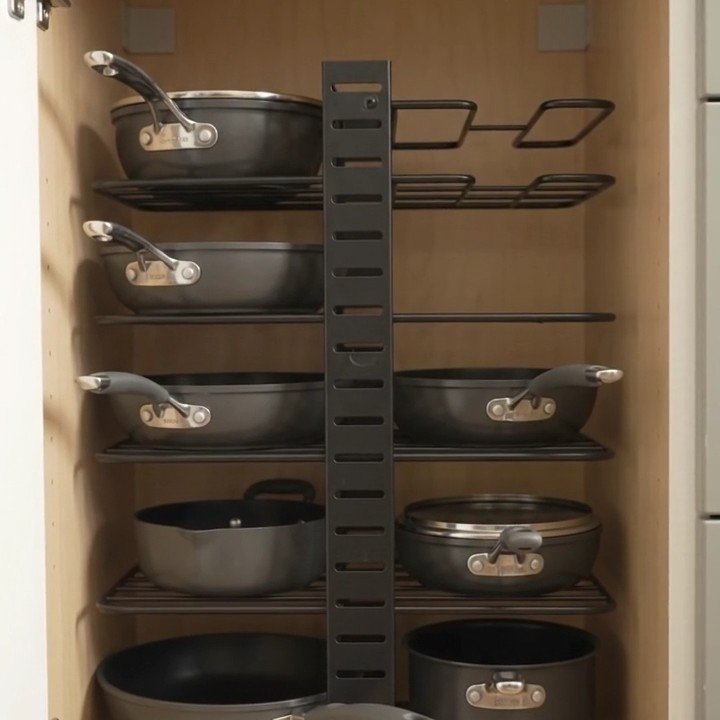
Adjustable black metal rack that gives each pan or pot its own tier, so you can pull out the bottom pan without moving the rest. Tool-free assembly in three layouts.
View on AmazonAdd to Amazon cart 🛒Get the lids under control
- Store lids upright in a divider or a lid rack inside the cabinet or drawer.
- Hang lids on the inside of a cabinet door with a slim rack if the door has room to close.
- Flip a lid upside down on its own pot so the handle sits inside, which lets pots stack flatter.
Use the cabinet height
Most lower cabinets have one shelf and a lot of empty space above each stack. An expandable shelf or riser creates a second level for lids, small pans or baking dishes, and some fit around plumbing if your only free cabinet is under the sink.
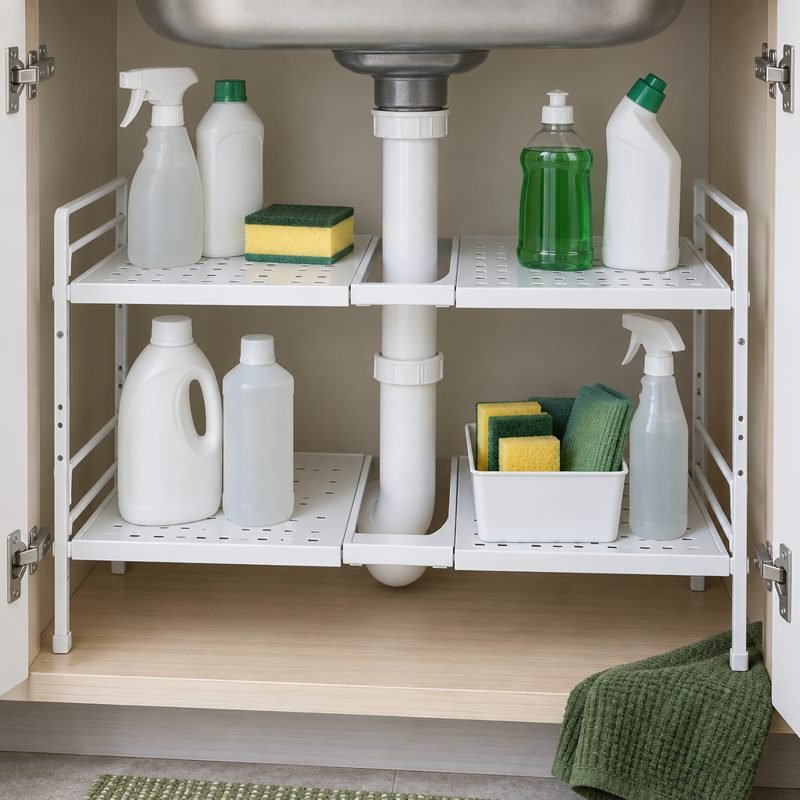
Widens to fit the cabinet, and the removable panels let the shelf sit around awkward pipes.
View on Amazon Add to Amazon cart 🛒Protect your cookware
- Do not stack heavy cast iron on top of nonstick pans.
- Let pans cool fully before storing to avoid warping.
- Dry cast iron completely and give it a thin coat of oil before putting it away.
- Keep the pans you use daily in the easiest spot, close to the stove.
If you have very little cabinet space
- Store the pan you use every day on the stovetop.
- Keep large holiday roasters or stock pots on a high shelf, in a closet, or under the bed in a box.
- Use the oven drawer, if your range has one, for sheet pans and baking dishes. Check your manual first; some drawers are warming drawers that heat up.
A quick setup plan
- Empty the cabinet and keep only the pieces you use.
- Measure the cabinet width, depth and the door opening.
- Put skillets upright in a rack on one side.
- Nest pots on the other side, largest at the bottom.
- File lids upright in a divider or on the door.
- Put the pan you reach for most at the front.
Frequently asked questions
Is it bad to stack nonstick pans?
Stacking without protection can scratch the coating. Place a felt pan protector, a soft cloth or a paper towel between them, or store them upright.
Where should pots and pans go in a kitchen?
In the cabinet next to or under the stove, so you can reach them while cooking.
Are pot racks worth it in a small kitchen?
They can free up a full cabinet, but they need strong wall or ceiling mounting and keep cookware exposed to grease. Renters often prefer in-cabinet racks.
How do you store pots and pans without cabinet space?
Use wall space: a rail or pegboard with S-hooks near the stove, magnetic hooks on the side of the fridge for light pans, or a small rolling cart. Keep only everyday pieces in the open so they do not collect grease.
Where should pot lids go?
Separately from the pots. A door-mounted lid rack or an upright divider keeps them from sliding around and lets the pots nest flat.
Is it okay to stack cast iron pans?
Yes, cast iron is durable, but put a paper towel or cloth between pans to protect the seasoning and absorb moisture, and make sure they are fully dry first.