How to Stop a Rice Cooker From Boiling Over (5 Fixes That Work)
White foam creeping out of the lid, a starchy puddle around the base and a sticky counter to scrub. Rice cookers boil over for a handful of reasons, and almost all of them are fixed before you press start.
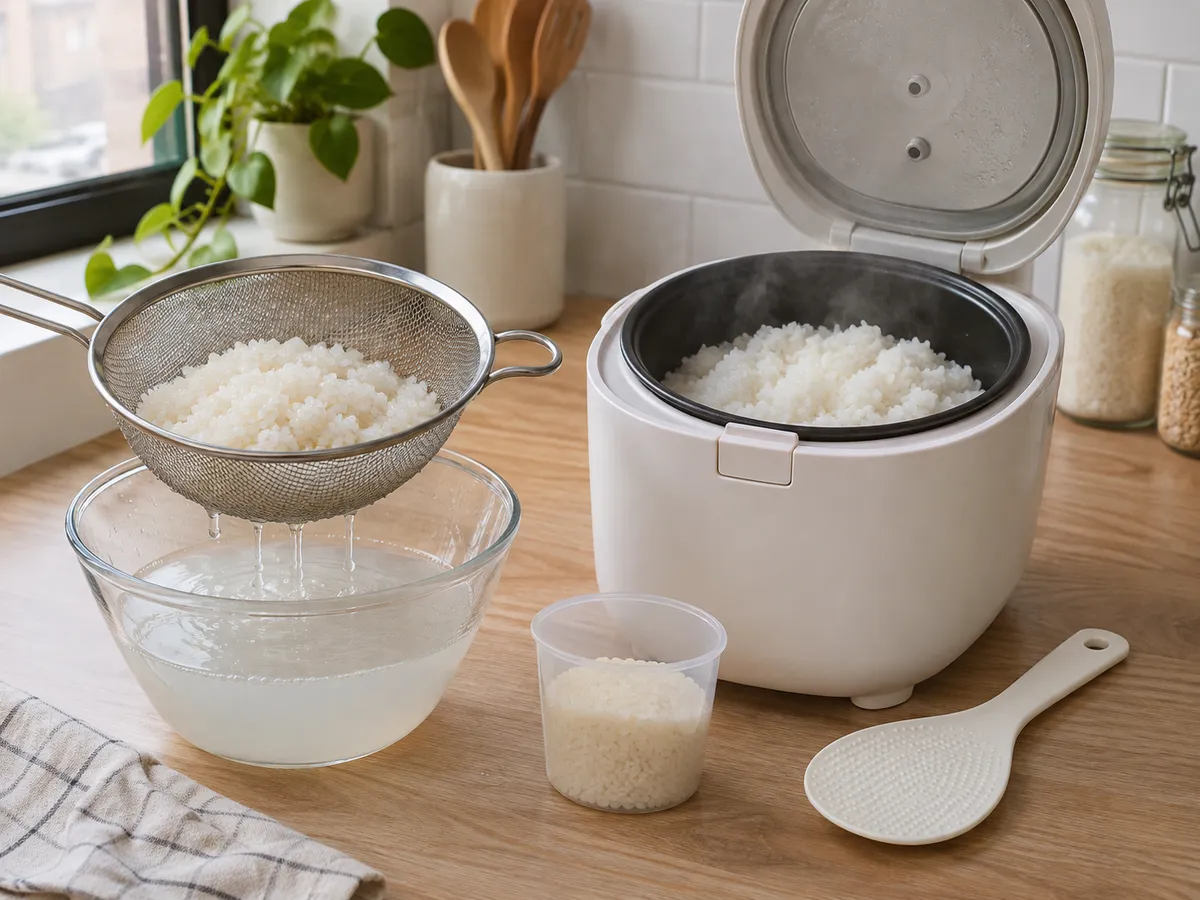
If you want to know how to stop a rice cooker from boiling over, start with what the foam is made of. It is mostly starch. Loose starch on the outside of the grains dissolves into the water, coats the bubbles as the water boils and keeps them from popping, so steam pushes them up and out through the vent or under the lid. More water and a fuller pot give that foam less room before it reaches the top.
Rice cooker makers point to the same short list. Aroma Housewares names excess starch from unrinsed rice as one of the top reasons for overboiling, and lists too much water, an overfilled pot and a clogged steam vent as the other causes. Panasonic adds that too much water, or a cooker standing on a tilt, can make rice bubble over.
Below are five fixes in the order to try them. None of them needs a new appliance.
Why rice cookers boil over
| Cause | What you see | Fix |
|---|---|---|
| Unrinsed rice | Thick white foam, starchy crust on the lid | Rinse until the water runs mostly clear |
| Too much water | Water spitting from the vent, soft or mushy rice | Use the cooker's cup and the inner pot's lines |
| Pot too full | Overflow mostly on big batches | Stay below the maximum line for that rice type |
| Clogged steam vent | Foam pushed out around the lid edge | Remove and wash the vent cap and inner lid |
| Cooker on a tilt | Overflow on one side only | Set it on a flat, level surface |
5 fixes, no new gear needed
- Rinse the rice first. Put the rice in a bowl or strainer, cover it with cool water, swish, drain and repeat. Aroma recommends rinsing three to five times, or until the water runs mostly clear. This removes the loose surface starch that builds the foam. Rinse in a separate bowl rather than scrubbing in the nonstick inner pot.
- Measure with the cup that came with the cooker. Aroma notes that its cup is slightly smaller than a standard US cup. If you measure rice with a US cup and then fill water to the cooker's line, or the other way around, the ratio is off. Use the included cup for the rice and the inner pot's marked lines for the water.
- Add rice first, then water. Aroma lists this order because water filled before the rice will sit higher than the line once the rice goes in. Level the rice with your hand before reading the line.
- Cook less than the maximum. An overfilled pot leaves the foam no room. If the cooker overflows only on large batches, cook a smaller amount or two batches. Brown rice and blends have their own lines on many inner pots, so follow those.
- Clean the steam vent and inner lid. Aroma names a clogged vent as a cause of overflow. Dried starch builds up in the vent cap and the gasket over time. Remove the parts your manual says are removable and wash them after cooking.
Also check that the cooker sits flat. Panasonic notes that a tilted cooker can bubble over. A cutting board or folded towel under one foot is enough to throw it off.
Watch the fix in 15 seconds
This short shows rice foaming over and the switch to a small fuzzy logic rice cooker. Some scenes were made with AI.
If your old cooker still boils over
If every fix above is in place and a basic one-switch cooker still foams over, a cooker that controls its own heat is the next step. The one in the video is the CUCKOO CR-0375FW fuzzy logic rice cooker (#ad). Its listing describes a 3-cup uncooked / 6-cup cooked capacity, fuzzy logic that adjusts cooking time and temperature, a nonstick inner pot, a removable lid, a self-clean setting, quick white rice, timer and warm modes, and an included measuring cup and spatula. That small footprint suits a narrow counter. The honest catch, from buyer reviews: it is slower than cooking rice on the stove, the settings take some getting used to compared with a one-button cooker, and the capacity is too small for people who cook big batches. It also still needs rinsed rice and the right water line. Check today's price on Amazon.
Common mistakes
- Covering the vent with a towel. It traps steam instead of releasing it. Clean the vent instead.
- Mixing cups. A US measuring cup for rice plus the cooker's water line gives too much or too little water.
- Using the white rice line for brown rice. Grains cook differently; use the setting and line meant for them.
- Cooking right up to the max line every time. If overflow only happens on full batches, the batch is the problem.
- Wiping a hot overflow with the cooker plugged in. Unplug it and let it cool before cleaning around the base and cord.
Frequently asked questions
Is it normal for a rice cooker to bubble a little?
Yes. Aroma Housewares says some bubbling is normal, but foam running over the rim usually points to excess starch, too much water or an overfilled pot.
Why does my rice cooker boil over even with the right water line?
The usual causes are unrinsed rice, rice measured with a standard US cup instead of the smaller cup that came with the cooker, a load near the maximum, or a blocked steam vent.
Should I put a towel over the steam vent?
No. The vent lets steam escape, and Aroma lists a clogged vent as one cause of overflow. Clean the vent cap instead of covering it.
Does brown rice boil over more than white rice?
Brown rice and grain blends cook longer and need different water amounts, so use the cooker's brown rice setting and its own water line or chart rather than the white rice line.
Sources
- Aroma Housewares: Troubleshooting Overboiling, Undercooked, or Burnt Rice
- Aroma Housewares: Rice & Grain Cooker FAQs
- Panasonic: How to cook rice in a rice cooker
- Tasting Table: The Reason Your Rice Keeps Bubbling Over
Checked November 6, 2026. Product details are from the Amazon listing and its customer reviews; we have not tested this rice cooker ourselves.