How to Organize Canned Goods in a Small Pantry
A step-by-step way to organize canned goods and jars so the oldest gets used first, with can racks, shelf risers and turntables that fit small pantries.
Cans are the easiest pantry item to lose track of. They stack into towers, the labels face every direction, and the can at the back expires while you keep buying new ones. The fix is less about buying more storage and more about setting up the shelf so the oldest can is always the easiest one to grab. This guide walks through that setup, then compares a few well-reviewed organizers that make it stick.
Prices change often. The prices below are approximate at time of writing; check the current price on Amazon before you buy. As an Amazon Associate I earn from qualifying purchases, at no extra cost to you.
Quick picks
- Best can rack for a deep shelf: Simple Houseware 3-Tier Stackable Can Rack
- Best for a shallow cabinet: Dial Industries 3-Tier Expandable Pantry Shelf
- Best for jars and spices in a corner: 10-Inch Non-Skid Lazy Susan, Set of 4
- Best for dry goods next to the cans: Vtopmart Airtight Food Storage Containers, 24 Pieces
Step 1: Empty the shelf and check dates
Take every can and jar out. Toss anything dented, bulging, rusted or leaking, and set aside anything close to its date to use this week. Group what is left by type: beans, tomatoes, soups, vegetables, fruit, fish. Counting each group tells you how much space it really needs, which matters when you choose a rack.
Step 2: Decide on a "first in, first out" system
The goal is simple: new cans go in the back, older cans come out the front. You can do that three ways.
- Rolling can rack: load from the back or top, and the can at the front is always the oldest. Best for the types you buy often.
- Tiered riser: cans sit in rows on steps so you can read every label. Best for many different types in small numbers.
- Turntable: jars and small cans on a spinning tray in a corner, so nothing hides in the back.
Step 3: Pick the organizer that fits your shelf
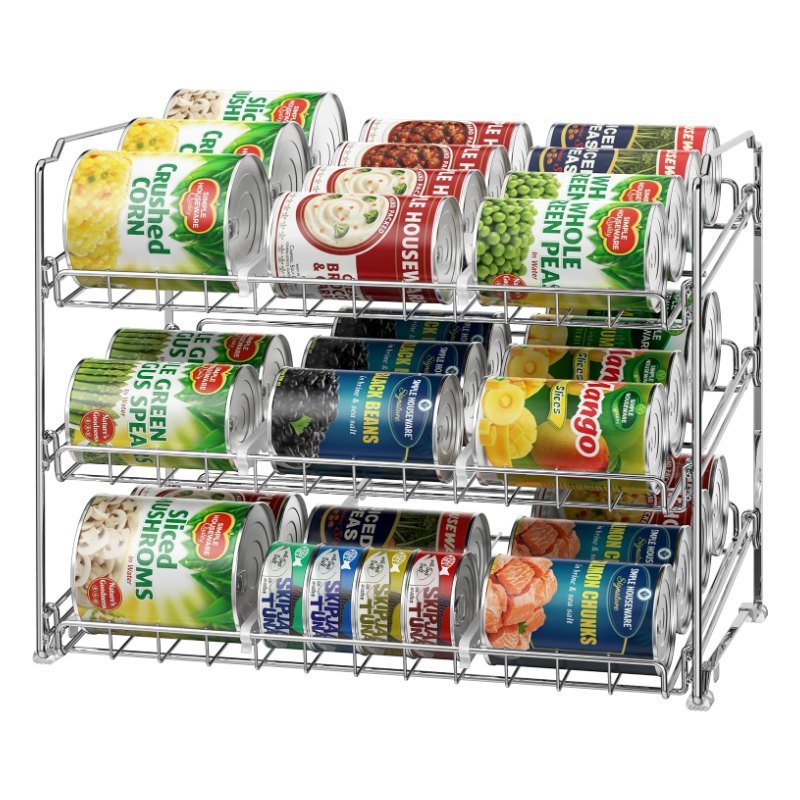
A chrome rack with three rolling tiers that holds up to 36 cans. The listing gives its size as 11.5 inches deep, 17 inches wide and 13.75 inches tall, and it stacks with clips if you need more rows. Around $26 at time of writing.
Who it is for: Households that buy the same canned goods every week and have a reasonably deep pantry shelf.
Worth knowing: The maker says it needs at least 12 x 17.5 x 16 inches of space, and several buyers found it too tall for upper cabinets. Very tall cans (around 28 oz) are a squeeze on the lower tiers. Measure the shelf height before you order.
Check price on Amazon Add to Amazon cart 🛒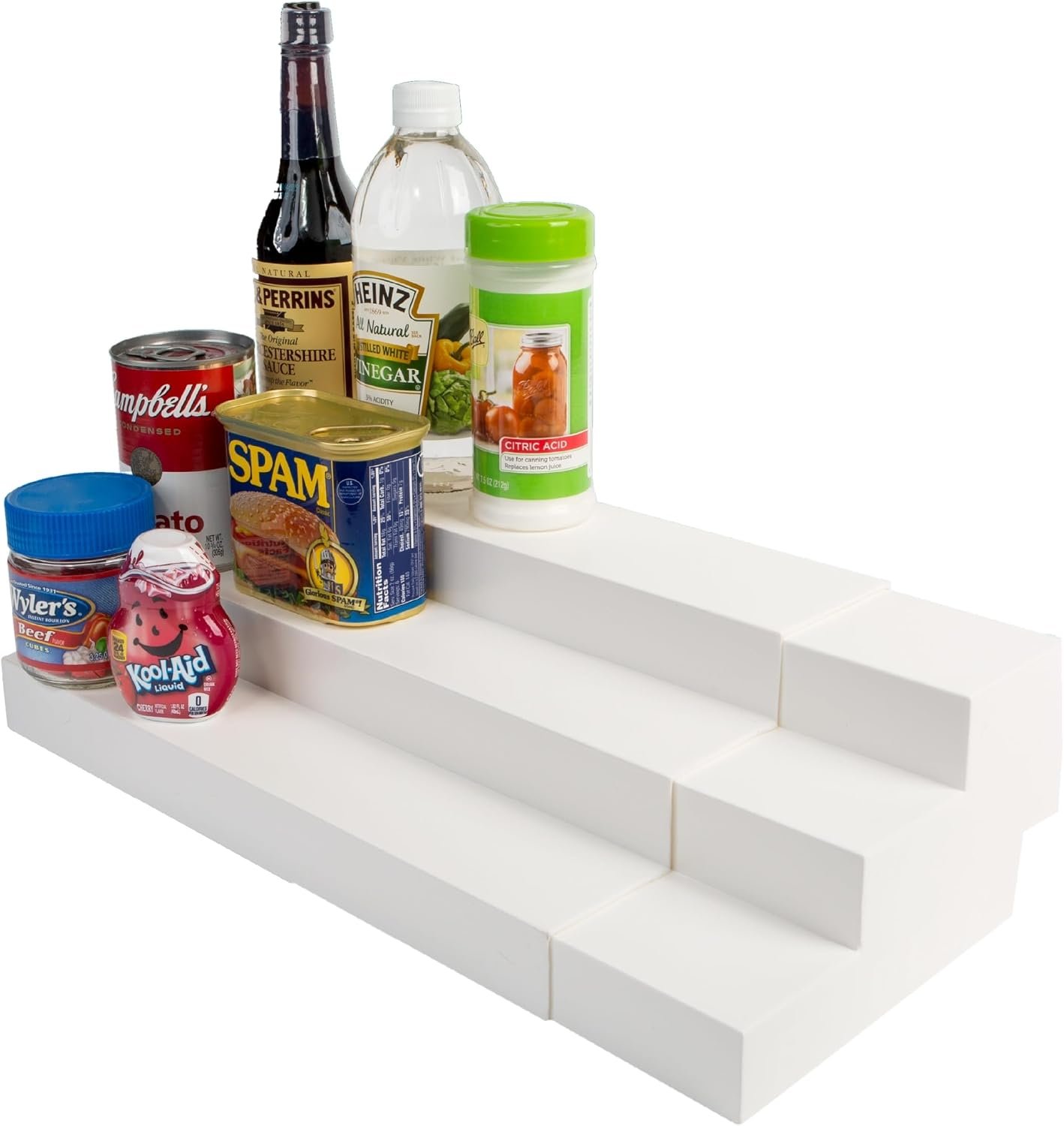
A slim three-step riser that expands from 14 to 27 inches wide and stands just 4.25 inches tall. The top step is 3 inches deep for standard 16 oz cans; the lower two are 2.38 inches deep for smaller cans and jars. Made in the USA. Around $15 at time of writing.
Who it is for: Shallow cabinets and shelves where a rolling rack will not fit.
Worth knowing: It is narrower and shallower than many buyers expect: several say standard cans barely fit and that it suits spices and small jars better. A few also mention the shelves bowing in the middle when fully loaded. Measure your cans and the shelf depth first, and put heavier cans on the bottom step.
Check price on Amazon Add to Amazon cart 🛒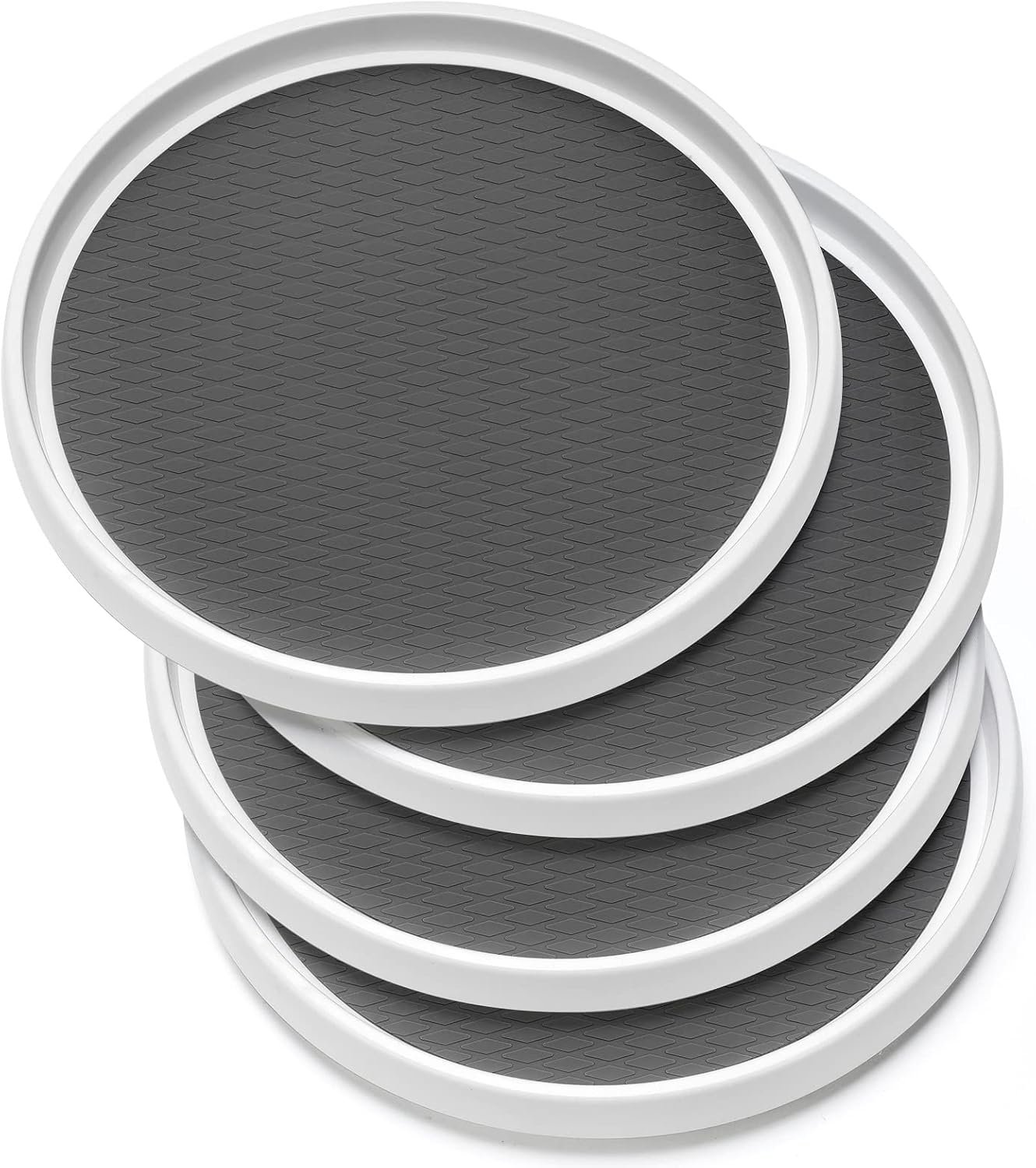
Four plastic turntables about 10 inches across with a non-slip surface. The usable area is about 9.1 inches, enough for roughly eight soda cans each. Around $20 at time of writing.
Who it is for: Corner shelves and deep cabinets where jars and small cans get pushed to the back.
Worth knowing: At 10 inches across each turntable is smaller than many expect, and a few buyers found they did not fit a 12-inch-deep upper cabinet with the door closed. The non-skid top keeps jars from sliding, which also means you cannot slide items across it. Check one arrived spinning freely when you unbox the set.
Check price on Amazon Add to Amazon cart 🛒Step 4: Move dry goods into clear containers
Once the cans are under control, the next mess is usually opened bags of pasta, rice and snacks. Clear, stackable containers keep them fresh and let you see when you are running low.
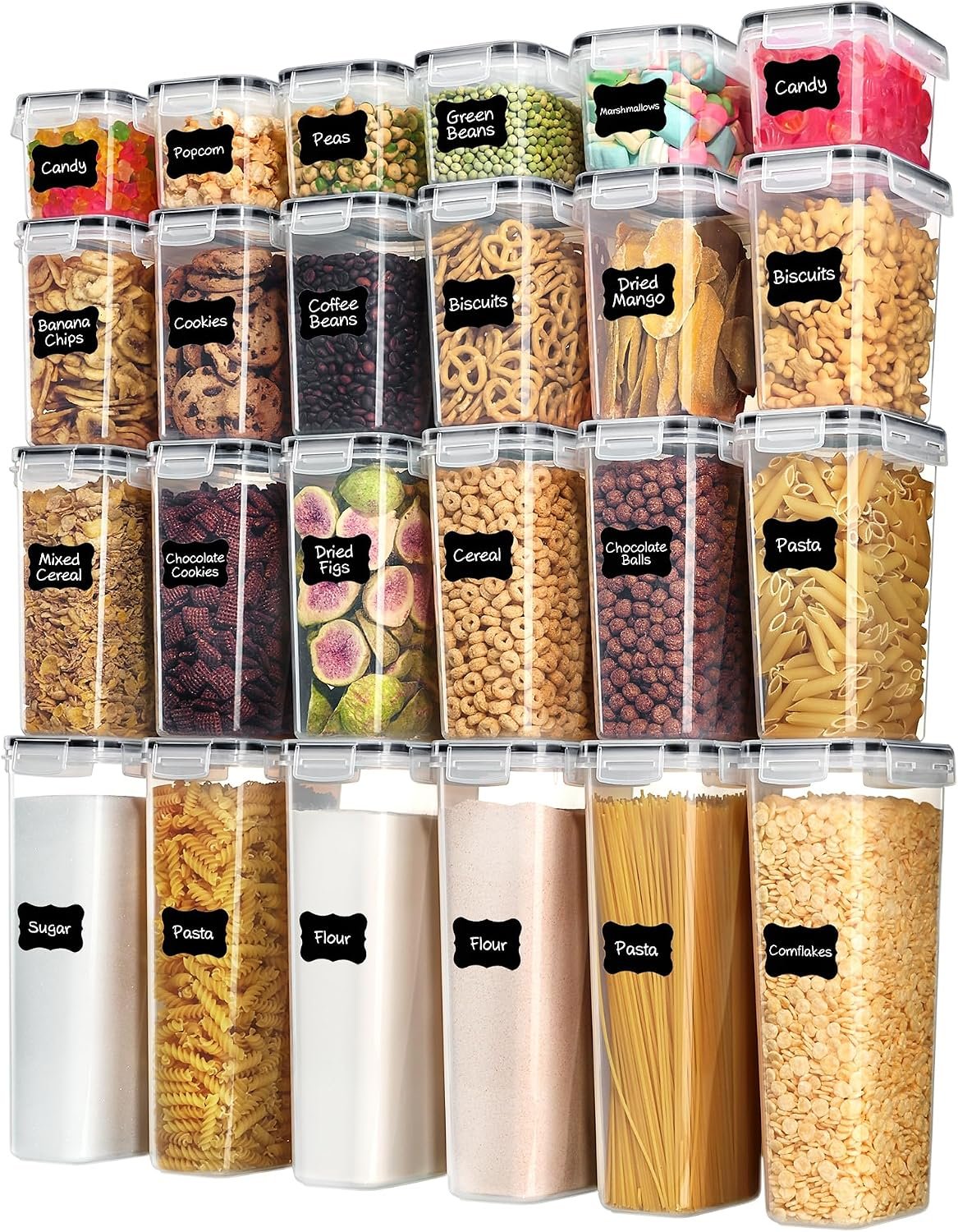
A set of clear containers in four sizes with locking lids, plus labels and a marker. They stack, so a single shelf holds a lot. Around $32 at time of writing.
Who it is for: Pantries with lots of half-open bags of dry goods.
Worth knowing: Containers ship tightly nested, and the most common complaint is how hard they are to pull apart on arrival. Some buyers found the plastic thinner than expected for the price, and a few were missing a piece or the label sheet, so count everything when the box arrives.
Check price on Amazon Add to Amazon cart 🛒Step 5: Label the shelf, not just the cans
- Put a small label on the shelf edge for each group so everyone in the house puts things back in the same place.
- Keep a "use this week" spot at the front for anything close to its date.
- Do a two-minute check before each grocery trip so you do not double up.
Measure before you buy
- Shelf depth: front edge to back wall. Rolling racks need roughly 12 inches.
- Clear height: shelf to the shelf above. Leave an inch or two to load cans from the top.
- Can size: measure the tallest can you buy often; 28 oz cans are much taller than standard ones.
Frequently asked questions
How long do canned goods last?
Most shelf-stable canned foods have a best-by date of one to several years. Discard any can that is bulging, leaking, deeply dented along the seam, or badly rusted, whatever the date says.
Should cans be stored on their side?
A rolling rack stores them on their side, which is fine for sealed cans. The point is that the oldest can rolls to the front so it gets used first.
What is the best way to organize cans in a small pantry?
Group by type, then use a rolling rack for the types you buy often and a tiered riser for the rest so every label stays visible.
Can a can rack fit in an upper cabinet?
Sometimes. Many three-tier racks are 13 to 16 inches tall, which is too tall for some upper cabinets. Measure the clear height first.