Spice Storage Ideas and How Long Spices Really Last
Keep spices easy to find and full of flavor: where to store them, how to arrange them, and when to replace them.
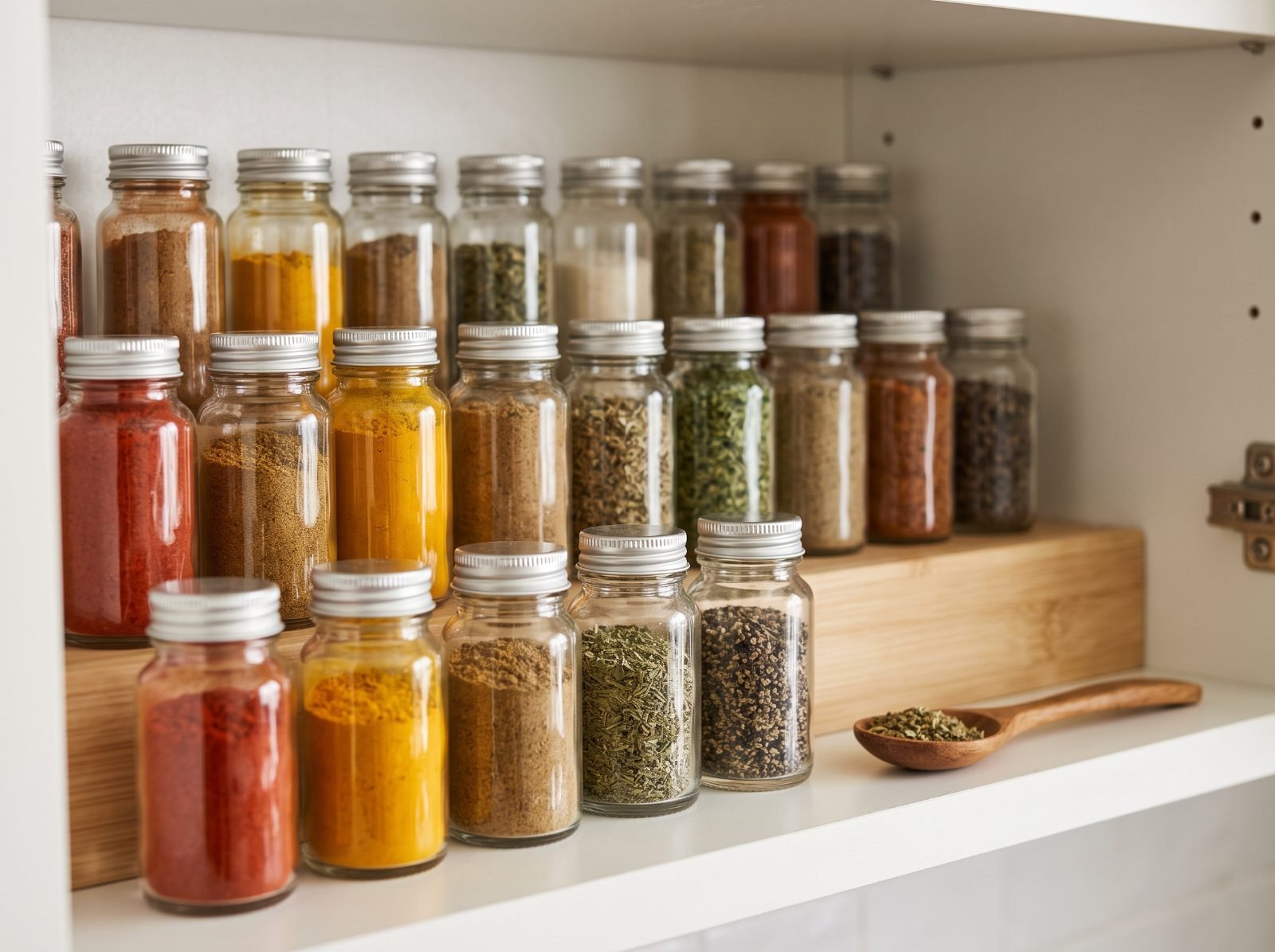
Spices are small, but they cause a surprising amount of kitchen clutter: duplicate jars, half-empty bags and bottles that lost their flavor years ago. Good spice storage does two things. It keeps the spices you use easy to see, and it keeps them away from the heat, light and moisture that dull their flavor.
Where not to keep spices
- Above the stove: heat and steam from cooking shorten their life, even though it is convenient.
- Next to the dishwasher or sink: moisture can cause clumping.
- In direct sunlight: light fades color and flavor, especially in clear jars on an open rack.
A cabinet or drawer a step away from the stove is usually the best balance between convenience and freshness.
How long spices keep their flavor
| Type | General guideline for best flavor |
|---|---|
| Whole spices (peppercorns, cinnamon sticks, cloves) | About 2 to 4 years |
| Ground spices (cumin, paprika, cinnamon) | About 2 to 3 years |
| Dried herbs (oregano, basil, thyme) | About 1 to 3 years |
| Seasoning blends | About 1 to 2 years |
These are common industry guidelines for quality, not safety. Old spices are not usually unsafe, they just taste weaker. To check, rub a little between your fingers and smell it. If the aroma is faint, it is time to replace it.
Four ways to organize spices
| Method | Best for |
|---|---|
| Tiered shelf in a cabinet | Seeing every label at once |
| Turntable | Corner cabinets and tall bottles |
| Drawer insert with jars lying flat | Kitchens with a spare shallow drawer |
| Door rack | Small kitchens with no free cabinet |
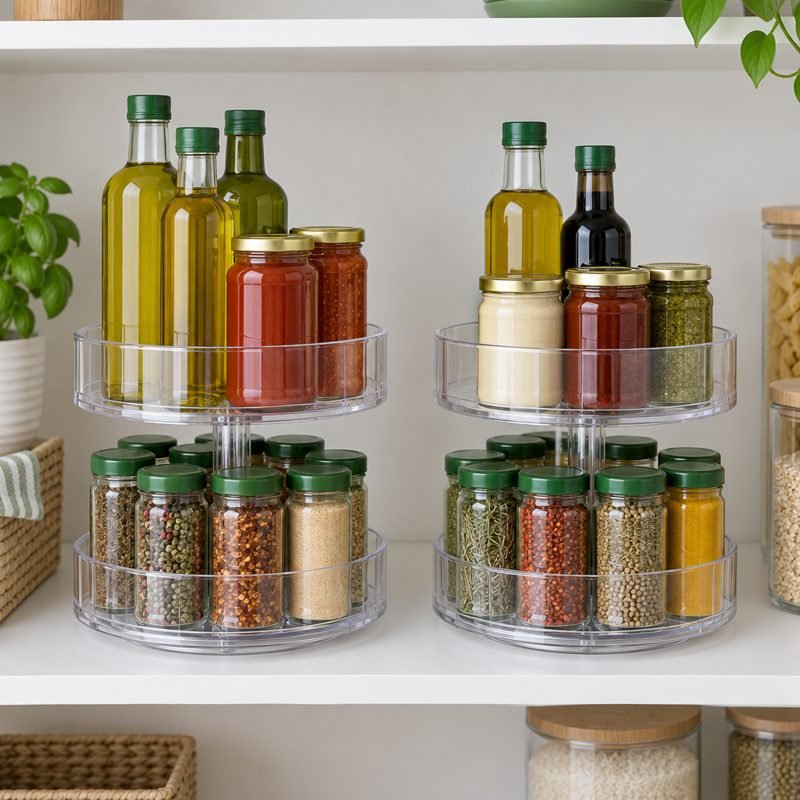
Spin to reach oils, sauces and spices at the back of a shelf. Two tiers use the height of the cabinet.
View on Amazon Add to Amazon cart 🛒If you have a spare drawer, an angled insert lays the jars down so every label faces up instead of showing only lids. Measure first: this set needs a drawer interior of about 13 inches wide, 17.5 inches deep and 2.5 inches tall. Buyers note that the 28 glass jars arrive empty, the four tiers are separate pieces that can slide around (a non-slip liner helps), a few orders came with broken jars, and the included white label pen is weak.
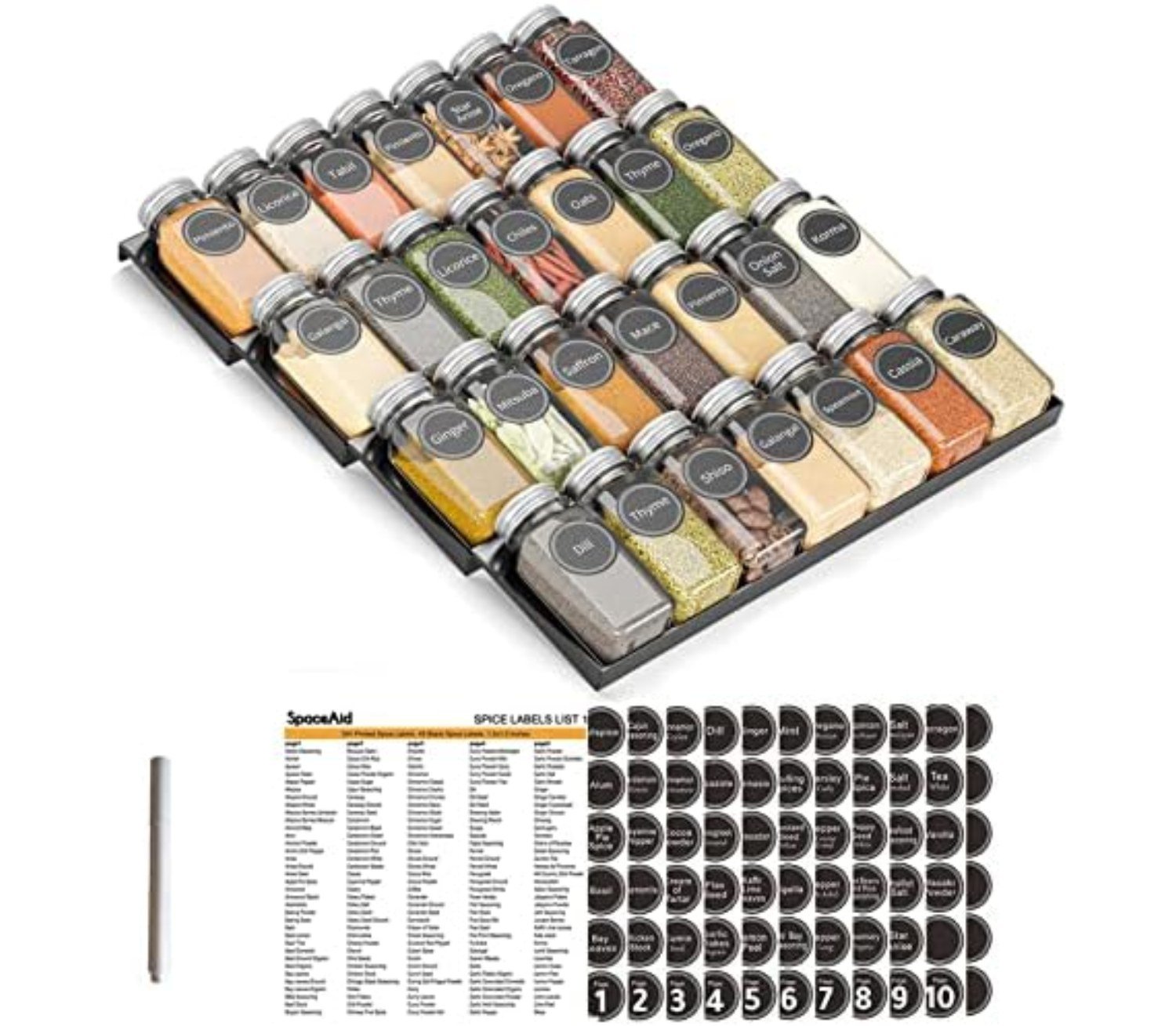
Four angled tiers, 28 empty square glass jars and 386 labels. Needs a drawer about 13" W x 17.5" D x 2.5" H.
View on AmazonAdd to Amazon cart 🛒Arrange them so you can find them
- Alphabetical order works well for large collections.
- Grouping by cuisine or use (baking, Mexican, Italian, Korean) works well for smaller ones.
- Keep the five or six you use most at the front.
- Write the purchase date on the bottom of each new jar.
Buy smarter
- Buy small jars of spices you rarely use.
- Buy whole spices and grind them as needed if you want the longest shelf life.
- Check what you have before shopping to avoid duplicates.
Spice storage in a small kitchen
- Use the inside of a cabinet door with a slim rack for the spices you use most.
- Store backup bags of spices in a labeled bin in the pantry, and refill jars from them.
- Choose square jars, which waste less space than round ones.
- Keep baking spices with baking supplies so they are not taking space near the stove.
A yearly spice check
- Take every spice out once a year, for example in January.
- Smell and look at each one. Replace any with faint aroma or faded color.
- Combine duplicate jars if they are the same age.
- Wipe the shelf and put back only what you use, with the favorites in front.
- Note what you threw out and buy smaller jars of those next time.
Set up a spice zone in 30 minutes
A good spice setup is less about the rack and more about order. These steps work for a drawer, a cabinet shelf or a door rack.
- Pull every jar out. Gather spices from every cabinet so duplicates show up.
- Smell and check. If a ground spice has little smell or has faded in color, it has lost most of its flavor. Replace only what you use.
- Measure the space. For a drawer, measure the inside height, width and depth. For a shelf, measure the clear height to the shelf above. Write the numbers down before buying any organizer.
- Group by how you cook. Daily spices in front, baking spices together, blends together, rarely used spices in the back.
- Label the lids or fronts. In a drawer, jars lie down or stand under you, so label the lid. On a shelf, label the front.
- Keep it near the stove, not over it. A drawer or cabinet beside the cooking area works well; heat and steam right above the burners make spices lose flavor faster.
Which setup fits your kitchen?
| Setup | What to measure | Best for | Watch out for |
|---|---|---|---|
| Drawer insert | Inside drawer height, width, depth | Seeing every label at once | Tall jars may not fit in shallow drawers. |
| Tiered shelf riser | Cabinet depth and clear height | Deep cabinets | Back rows are still harder to reach. |
| Door-mounted rack | Door width and gap to the shelves | Small kitchens with no free drawer | Check that the door still closes. |
| Turntable | Cabinet width and depth | Corner cabinets | Small jars can tip over when spinning. |
Keep the order once it is set
Return each jar to its row right after cooking, and write the purchase month on the bottom of new jars with a marker. When you run out, put the empty jar on the counter as a reminder to add it to the shopping list. Buying smaller containers of spices you rarely use avoids wasting money on jars that fade before you finish them. Once a year, repeat the smell test and clear out anything that has lost its color and aroma.
Frequently asked questions
Should spices go in the fridge?
Most dried spices do best in a cool, dry cabinet. Some cooks keep red spices like paprika and chili powder in the fridge to keep their color longer; if you do, keep the jar tightly closed to avoid moisture.
Do spices expire?
They lose flavor over time rather than spoiling. Throw out any that look damp, clumpy or moldy.
What jars are best?
Airtight glass or metal jars with tight lids, kept out of direct light.
Should I buy whole or ground spices?
Whole spices such as peppercorns, cumin seeds and cinnamon sticks keep their flavor much longer than ground ones. Buying small amounts of ground spices you use often is a good balance.
How do I label spices in a drawer?
Put the label on the lid so you can read it from above. Round lid stickers or a paint pen both work, and they make it easy to keep the drawer in order.