Small Apartment Entryway Organization Without a Closet
Shoes, keys, bags and mail pile up by the door. A simple setup that fits a narrow entry and takes no drilling.
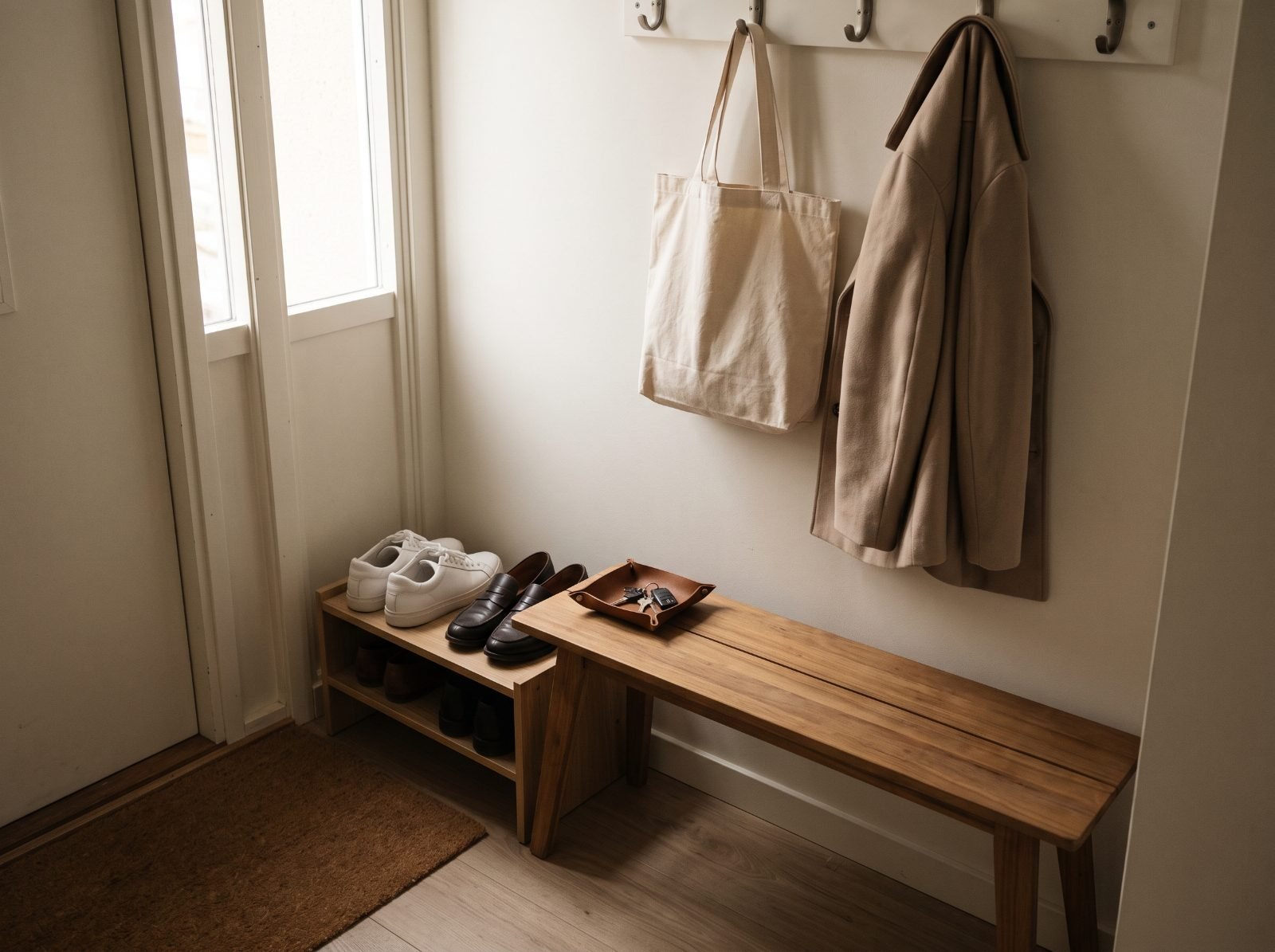
In many apartments the front door opens straight into the living room or a narrow hallway, with no coat closet. Shoes spread across the floor, keys get lost and mail piles up on the nearest surface. A good entryway does not need much space. It needs a spot for each thing you carry in and out every day.
List what comes through the door
Before buying anything, write down what you and your household drop by the door daily. For most people it is shoes, a bag or backpack, keys, a jacket, mail and maybe a dog leash or umbrella. Each item needs one home.
A layout for a narrow entry
| Item | Where it goes | Option without drilling |
|---|---|---|
| Shoes | Floor, along the wall | Low two-tier shoe rack or a tray for wet shoes |
| Keys | At hand height | Small bowl or tray on a shelf |
| Bags and jackets | Wall or door | Over-the-door hooks or a freestanding coat rack |
| Next to the keys | A slim wall pocket or a small upright file | |
| Seasonal items | Out of the way | A bin under a bench or in a closet |
Get shoes off the floor
Shoes take the most floor space in a narrow entry. A three-tier rack along the wall stacks them vertically, keeps the path to the door clear and lets damp shoes dry on open slats.
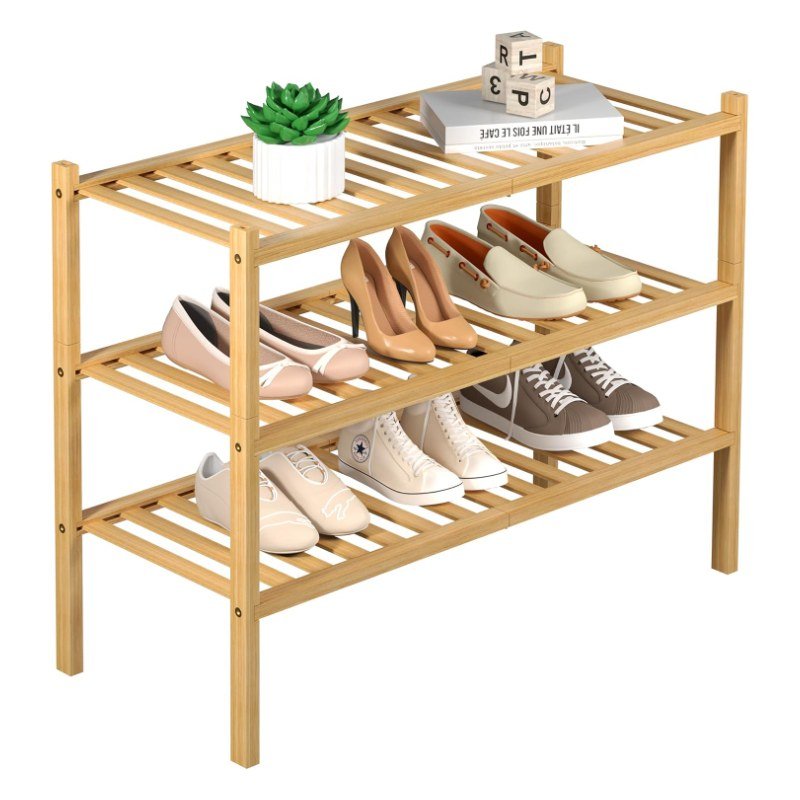
A bamboo rack 27 inches wide, 11 inches deep and 20 inches tall with three slatted shelves. It holds about 8 to 9 pairs and can be stacked with a second rack.
View on AmazonAdd to Amazon cart 🛒Worth knowing before you buy: measure the wall first, since it needs 27 inches of width and 11 inches of depth. Buyers often say it can feel wobbly and the stacking pegs are loose, so keep it against a wall; some added a little wood glue at the joints. A few received pieces with cracks or missing hardware, so check the parts before you start assembly.
Use the back of the door
An over-the-door organizer on the front door or the nearest closet door holds gloves, hats, dog supplies, reusable bags and small items that otherwise end up on the floor.
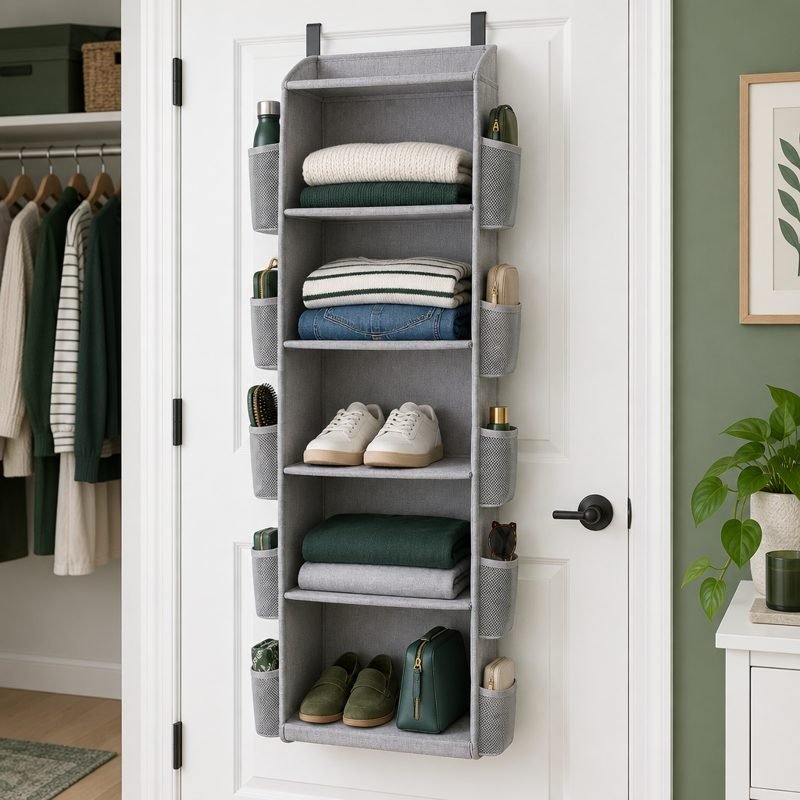
Five shelves plus side pockets hang on any door with no drilling. Useful for shoes, bags or cleaning supplies.
View on Amazon Add to Amazon cart 🛒Rules that keep the entry clear
- Each person keeps two or three pairs of shoes at the door. The rest go to the bedroom closet.
- Mail gets sorted the same day: recycle junk right away and file the rest.
- Keys always go in the same tray.
- Once a week, return anything that does not belong at the door.
Rental-friendly tips
- Use adhesive hooks rated for the weight of what you hang, and follow the curing time before loading them.
- Choose a freestanding coat rack if the walls are textured or freshly painted.
- A washable mat catches dirt and protects the floor.
Make it work for the whole household
An entryway only stays organized if it fits everyone who uses it. Give each person their own hook and shoe spot at a height they can reach, including children. If you have a dog, keep the leash, waste bags and a towel for muddy paws in one basket by the door. If you have guests often, leave one empty hook for visitors.
Seasonal swaps
Entry storage needs change through the year. In winter, add a boot tray and a bin for hats and gloves. In summer, swap those for a spot for sunscreen, umbrellas and reusable shopping bags. Store off-season items in a labeled bin under the bed or on a closet shelf so the entry stays clear.
Frequently asked questions
How do I store shoes in a tiny entry?
A slim, two-tier rack fits against a wall and keeps shoes off the floor. Store off-season shoes elsewhere.
Where should coats go without a closet?
Over-the-door hooks or a narrow freestanding rack near the door. Store heavy winter coats in the bedroom closet when it is warm out.
How do I stop losing keys?
Choose one spot, such as a small tray by the door, and use it every time. A hook works too if it is at eye level.