How to Organize a Fridge So Food Lasts Longer
Where each kind of food belongs, the right temperatures, and a simple weekly routine that cuts waste.
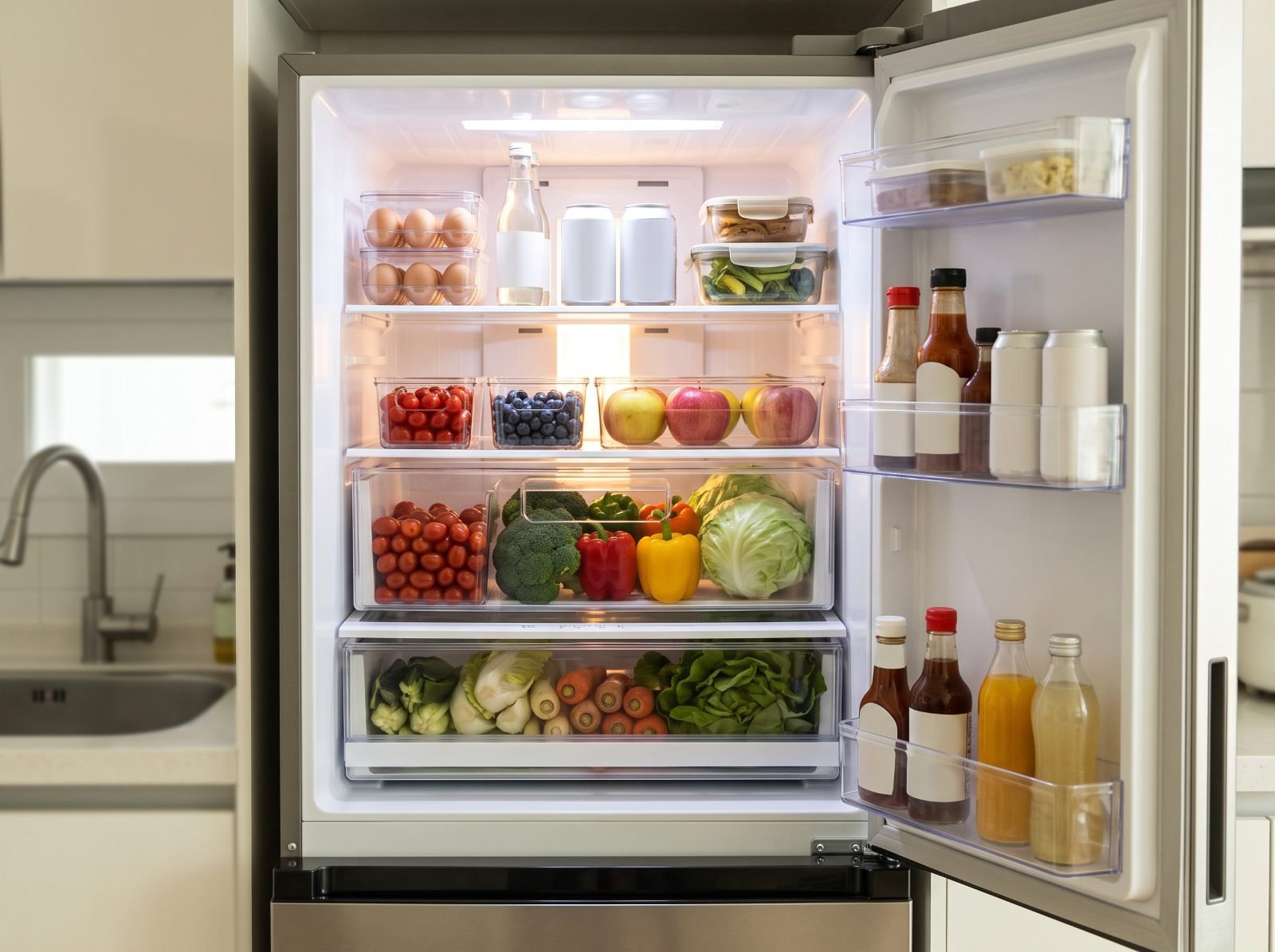
Start with the right temperature
A well organized fridge starts with the thermostat. The U.S. Food and Drug Administration recommends keeping the refrigerator at or below 40°F (4°C) and the freezer at 0°F (-18°C). Built-in dials are not always accurate, so an inexpensive appliance thermometer on the middle shelf is worth having.
Where each food belongs
| Zone | Why | Best for |
|---|---|---|
| Door | Warmest part, changes temperature each time you open it | Condiments, sauces, juice, butter |
| Upper shelves | Steady temperature | Leftovers, drinks, ready-to-eat food, herbs in water |
| Lower shelves | Coldest area in many fridges | Raw meat, poultry and fish on a tray or in a bin |
| Crisper drawers | Controlled humidity | One for vegetables (higher humidity), one for fruit (lower humidity) |
| Middle shelf | Easy to see | Dairy, eggs in their carton, foods to use first |
Keeping raw meat on the bottom shelf means any drips cannot fall onto food that will not be cooked. Eggs last longer in their original carton on a shelf than in the door.
Use bins to create zones
Clear bins act like drawers on a fixed shelf. Group by type, such as snacks, dairy, leftovers and drinks, and pull out a whole category at once. One bin labeled "eat first" is the single most useful habit for cutting waste.
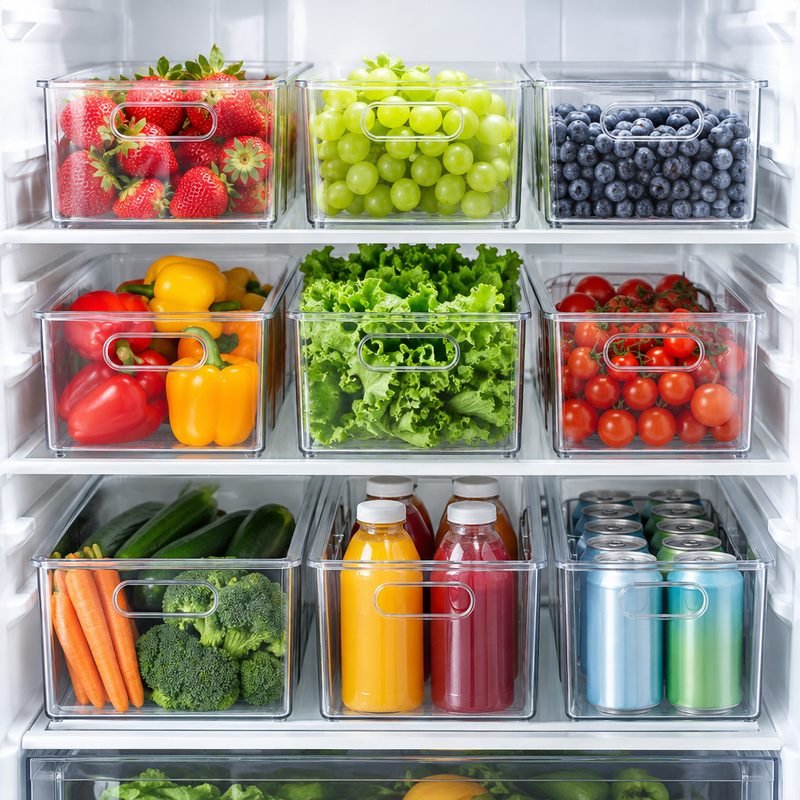
Stackable clear bins that group produce, snacks and drinks so the fridge is easier to see.
View on Amazon Add to Amazon cart 🛒A 10-minute weekly reset
- The night before grocery shopping, take out anything expired or spoiled.
- Move older food to the front or into the "eat first" bin.
- Wipe up spills on shelves and in the drawers.
- Check what is running low and add it to the list.
- After shopping, put new items behind the older ones.
How long leftovers keep
Most cooked leftovers are best eaten within 3 to 4 days in the refrigerator, according to USDA guidance. Label containers with the date so you do not have to guess, and freeze anything you will not eat in time.
Common mistakes
- Overpacking shelves, which blocks cold air from circulating.
- Storing milk in the door, the warmest spot.
- Putting hot food straight in a full fridge. Divide it into shallow containers so it cools faster.
- Keeping onions and potatoes in the fridge. Store them in a cool, dark, dry place, apart from each other.
Organize the freezer too
The freezer is where food is most likely to be forgotten, because frost and stacked bags hide everything.
- Freeze food flat in zip bags, then stand the bags upright like files once frozen.
- Label every bag with the contents and the date.
- Keep a running list on the freezer door of what is inside, and cross items off as you use them.
- Use bins to separate meat, vegetables, bread and ready meals.
- Store food at 0°F (-18°C). Frozen food stays safe at that temperature, though quality slowly declines over months.
Plan around a shopping day
Organizing works best when it is tied to a routine. Pick the day before your main grocery shop for the weekly reset. You will see exactly what you have, write a shorter list, and come home to a fridge with room for the new food. Over a month, this habit alone tends to reduce the amount of food thrown away, because nothing sits hidden long enough to spoil.
Set up your fridge in 20 minutes: step by step
A fridge stays organized when every shelf has one job. This setup works in any standard top-freezer, bottom-freezer or side-by-side model, and it only takes about 20 minutes once a season.
- Empty one shelf at a time. Working shelf by shelf keeps cold food out of the room for only a few minutes.
- Toss and wipe. Throw out anything spoiled or past its date, then wipe the shelf with warm, soapy water and dry it.
- Check the temperature. Put an appliance thermometer in a glass of water in the middle of the fridge. After a few hours it should read 40°F (4°C) or below.
- Give each shelf one job. Ready-to-eat food at the top, dairy and eggs in the middle, raw meat at the bottom in a tray, produce in the drawers, condiments in the door.
- Leave a gap. Keep a hand's width of space at the back of each shelf so cold air can move.
- Add an "eat first" spot. One small bin at eye level for leftovers and open packages that need to be used in the next two days.
What goes where, and why
| Zone | Keep here | Avoid here | Why |
|---|---|---|---|
| Top shelf | Leftovers, deli items, drinks | Raw meat | Ready-to-eat food should never sit below raw meat that could drip. |
| Middle shelf | Dairy, eggs | Fruit that ripens fast | Steady temperature away from the door. |
| Bottom shelf | Raw meat in a tray | Cooked food | Usually the coldest shelf; drips stay contained. |
| Crisper drawers | Produce, split by type | Meat, cheese | Drawers hold humidity that keeps produce crisp. |
| Door | Condiments, juice, butter | Milk, eggs | The door warms up every time it opens. |
Keep it working after the first clean-out
The setup only holds if it is easy to maintain. Keep a roll of masking tape and a marker in a drawer nearby so leftovers get a date the moment they go in. Put new groceries behind older ones of the same kind, so the oldest item is always the first one you see. Once a week, before your grocery shop, take everything out of the "eat first" bin and plan one meal around it. If a shelf keeps getting crowded, that is a sign the shelf's job is too broad; split it with a clear bin rather than adding more items.
Frequently asked questions
Should I put fruit and vegetables in the same drawer?
It is better to keep them apart. Some fruits release ethylene gas, which can make nearby vegetables spoil faster.
How do I stop fridge smells?
Clean spills quickly, toss old food weekly and keep an open box of baking soda on a shelf.
Is a fridge thermometer necessary?
It is not required, but it is the only way to know the real temperature, especially in older fridges.
How full should a fridge be?
Full enough to use the space, but not packed. Cold air needs to circulate around food, so leave gaps between items and keep the vents at the back clear.
Where should raw meat go?
On the bottom shelf, in its packaging and on a tray or in a container. That way any juices cannot drip onto food that will not be cooked.