How to Measure a Cabinet, Drawer or Door Before Buying an Organizer
Most returned organizers are not bad products. They are the wrong size. Five minutes with a tape measure saves the trip back to the post office.
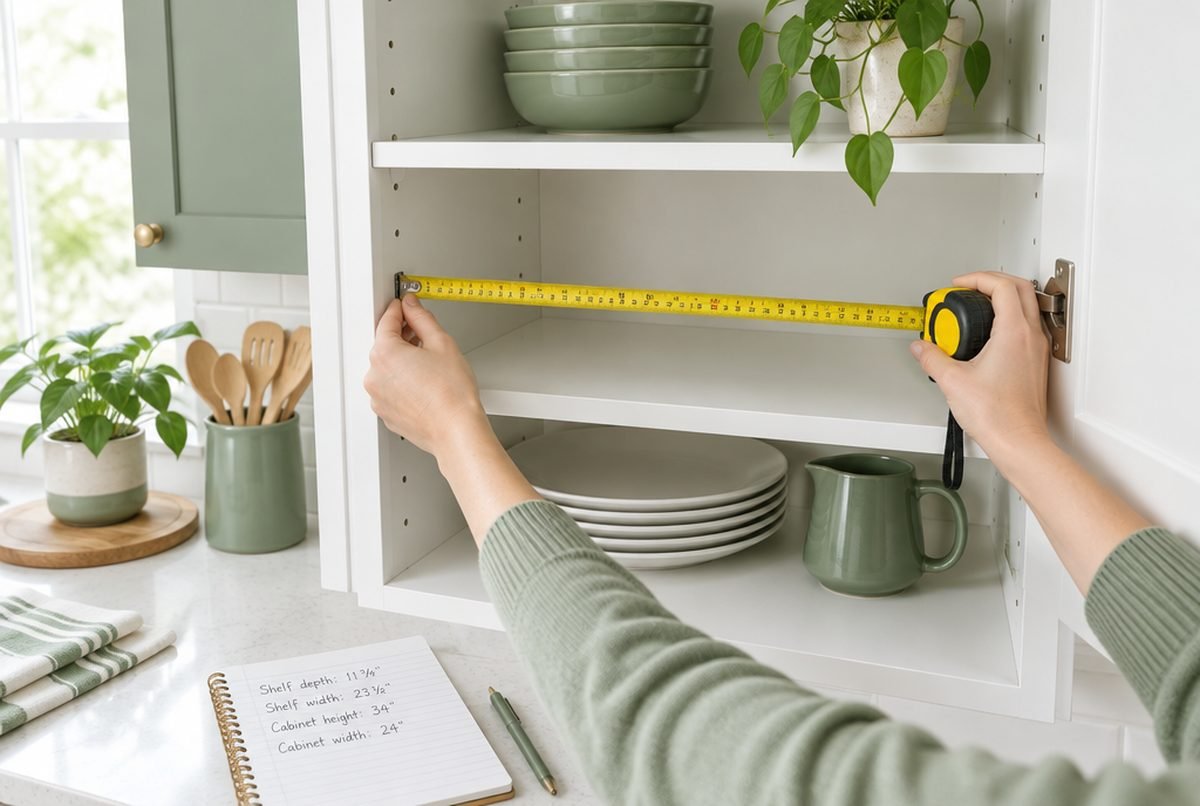
Most organizer returns have the same cause: the item did not fit. Product photos are taken in roomy, empty cabinets, and listing sizes describe the outside of the product, not the space it needs to slide, open or close. A few minutes with a tape measure prevents almost all of these problems.
Why listing sizes and real space never match
Product listings give the outside size of an organizer. Your cabinet gives you the inside size, minus everything that sticks out: hinges, door frames, pipes, shelf lips and the little ledge at the front of most drawers.
That gap is usually half an inch to an inch, which is exactly enough to stop a drawer from closing or a rack from sitting flat. Measuring the clear space, not the box, is the whole trick.
What you need
A tape measure, a phone for notes, and a flashlight for the back of deep cabinets. A small level helps for shelves but is optional.
Write every measurement in inches with the room and spot next to it, such as 'kitchen, left of sink, depth 19 in'. You will reuse these numbers for years.
Cabinets: width, depth, height and the door frame
Measure width inside the cabinet at the narrowest point, which is often the face frame at the front rather than the back wall. Measure depth from the inside of the door frame to the back wall.
For height, measure from the cabinet floor to the bottom of the shelf above, or to the bottom of the pipe under a sink. Then open the door and check whether hinges swing into the space; many hinges take up an inch on one side.
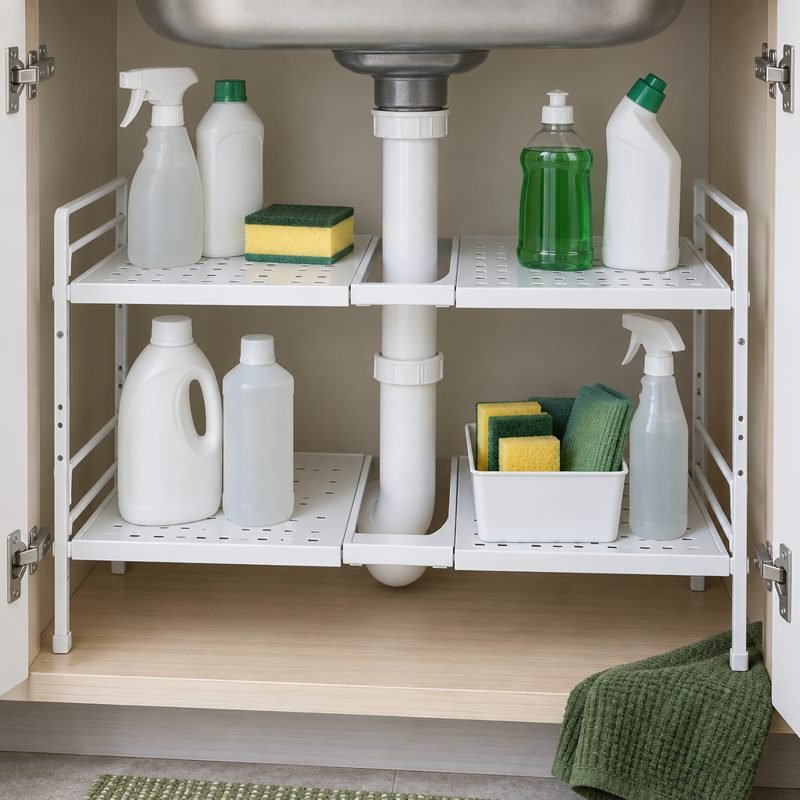
Widens to fit the cabinet, and the removable panels let the shelf sit around awkward pipes.
View on Amazon Add to Amazon cart 🛒Drawers: measure the inside floor
Pull the drawer fully open and measure the inside floor, side to side and front to back. Then measure the inside height and subtract a quarter inch so dividers do not catch on the counter frame when the drawer closes.
Sketch the drawer on paper and block out zones before you buy dividers. Long narrow pieces go along the sides, small squares go in the middle for things like batteries and clips.
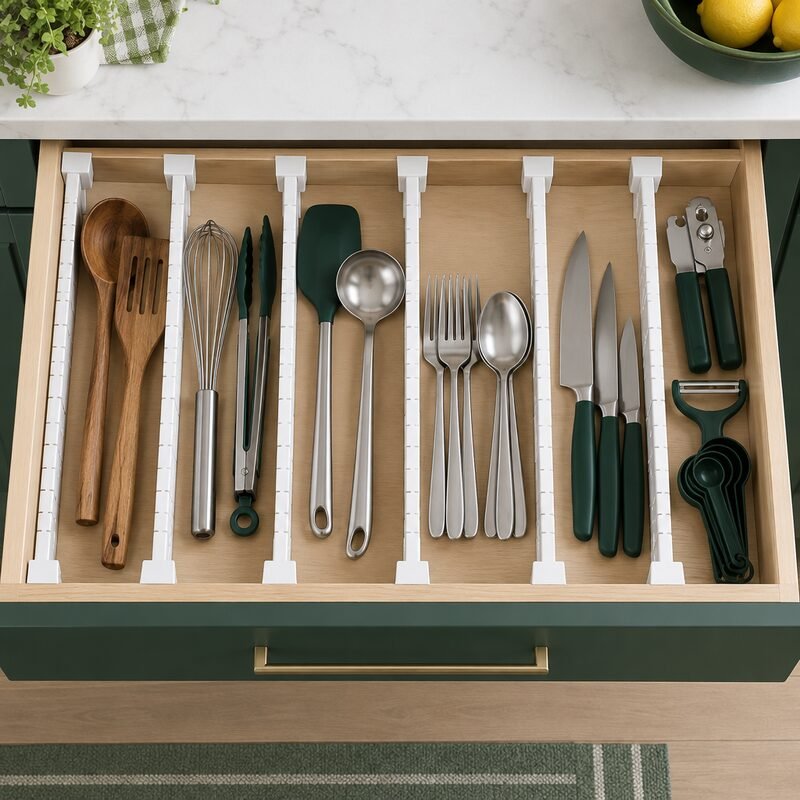
Four tray sizes that tile together, so a shallow junk drawer gets a place for every small item.
View on Amazon Add to Amazon cart 🛒Doors: thickness and swing clearance
Over-the-door racks hang on hooks, so measure the door thickness at the top edge. Most hooks fit doors between about 1.3 and 1.8 inches thick; check the listing.
Then measure the gap between the door and the shelves or wall behind it when the door is closed. A rack deeper than that gap will stop the door from closing.
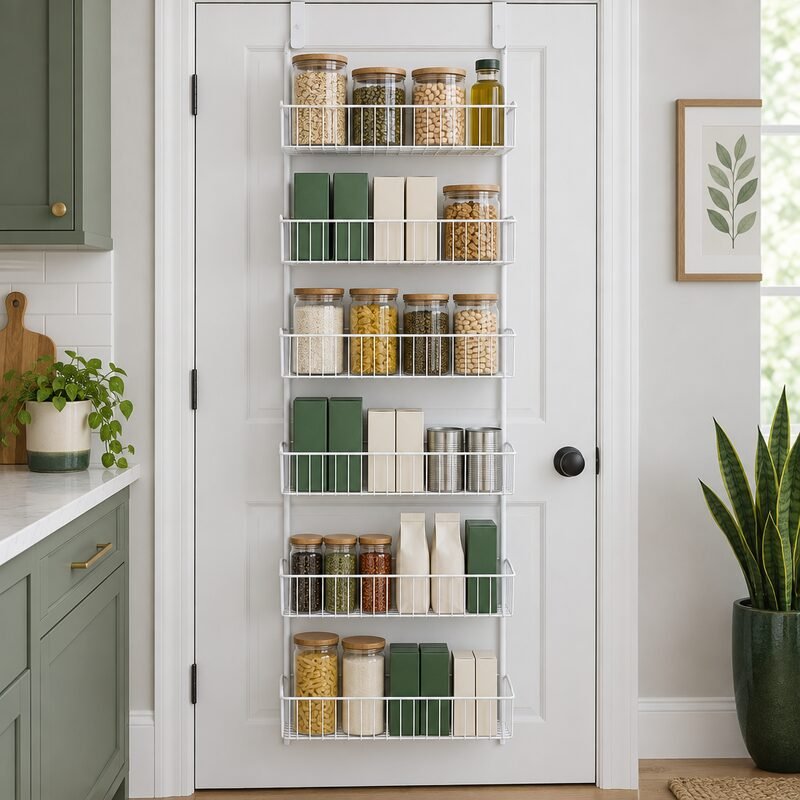
Hangs over a door or mounts on a wall, with shelves you can move to fit tall bottles and small jars.
View on Amazon Add to Amazon cart 🛒Under the bed and in closets
Measure from the floor to the bottom of the bed frame, not to the mattress, and measure at the side you will pull from. For closets, measure the rod length and the height between the shelf and the floor.
Leave about an inch of headroom for any storage bag or bin so it slides in and out without catching.
A quick checklist before you click buy
Compare your smallest measurement, not your largest, with the product's outside size. Look for adjustable or expandable pieces when your space is unusual. Check whether the listing measures the product with handles or lids included.
If a size is within half an inch of your space, pick the smaller option. A slightly small organizer still works; one that is slightly too big does not.
Listing size versus space needed
| Organizer | Listing usually shows | Also allow for |
|---|---|---|
| Sliding under-sink tier | Outer width, depth, height | Room for the slide to extend and clear the pipe |
| Drawer divider set | Each tray size | Curved drawer corners and the drawer front lip |
| Over-the-door rack | Height and width | Hook thickness at the top and depth when the door closes |
| Under-bed bin | Outer dimensions | Bed legs, center supports and lid height |
| Turntable | Diameter | Space to spin and to pass through the door opening |
Measuring tips that avoid mistakes
- Measure each dimension at the narrowest point, not the widest.
- Measure twice, at the front and at the back, since cabinets are not always square.
- Write numbers in inches and centimeters if you shop on international listings.
- Take a photo of the space with the tape measure in the frame.
- Round down, not up, when comparing to a product.
Reading product listings
- Look for "assembled dimensions" rather than package size.
- Check whether "height" includes handles, wheels or hooks.
- For expandable organizers, check both the minimum and maximum width.
- Read reviews that mention your type of cabinet or door.
If it still does not fit
Many organizers can be adapted: remove a shelf panel, use only one tier, or move the item to another space with the same measurements. If none of that works, return it while the window is still open.
Frequently asked questions
Do I need a special tape measure?
A standard retractable tape measure is fine. A flexible sewing tape helps for curved pipes or round items.
Should I measure with the door open or closed?
Both. Measure the inside space with the door open, and check door-mounted items with the door closed to see how much clearance remains.
What if my measurements fall between two sizes?
Choose the smaller size. A little extra room is fine. An organizer that is too large will not work at all.