Bathroom Under-Sink Storage Around Pipes: How to Use Both Sides
The drain pipe splits a bathroom vanity into two awkward halves. Plan each side on its own and the cabinet becomes usable again.
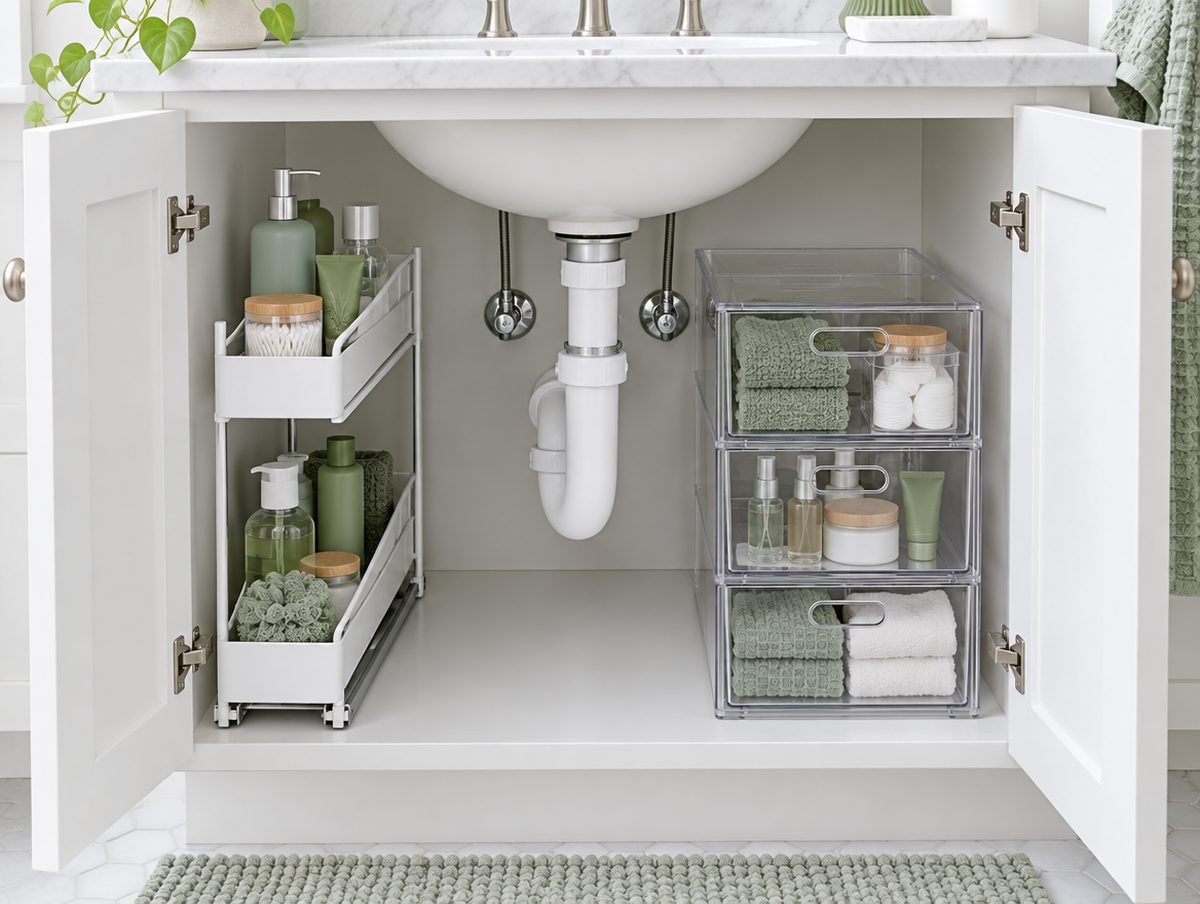
This guide covers the bathroom vanity: a shallower cabinet with a centered drain, used mostly for toiletries and cleaning supplies. If you are working on the bigger cabinet under a kitchen sink, with a garbage disposal or dishwasher hose in the way, see kitchen sink cabinet organizers that fit around pipes.
Bathroom vanities are smaller than kitchen sink cabinets, and the plumbing often runs right through the center. Add humidity and the occasional slow leak, and it is easy to see why the space ends up as a pile of bottles. This guide covers under sink storage around pipes step by step: how to split the cabinet into two usable halves, what to keep there, and how to protect it.
Why bathroom vanities are harder than kitchen cabinets
A bathroom vanity is usually narrower and shallower than a kitchen sink cabinet, and the drain pipe often drops straight through the middle. That leaves two tall, thin spaces instead of one open shelf.
Bathrooms are also humid, so whatever goes under the sink should wipe clean and sit off the cabinet floor where small leaks collect.
Measure each side separately
Measure the clear width from the cabinet wall to the pipe on the left and on the right, the height from the floor to the bottom of the pipe, and the depth from the door frame to the back wall.
Write the smallest number for each side. The two sides often need different organizers, and that is fine.
Use a sliding organizer on the deeper side
A narrow pull-out or sliding organizer brings the back of the cabinet forward, so spare toiletries and cleaning supplies stop getting lost behind each other. Check that the frame clears the pipe when it slides.
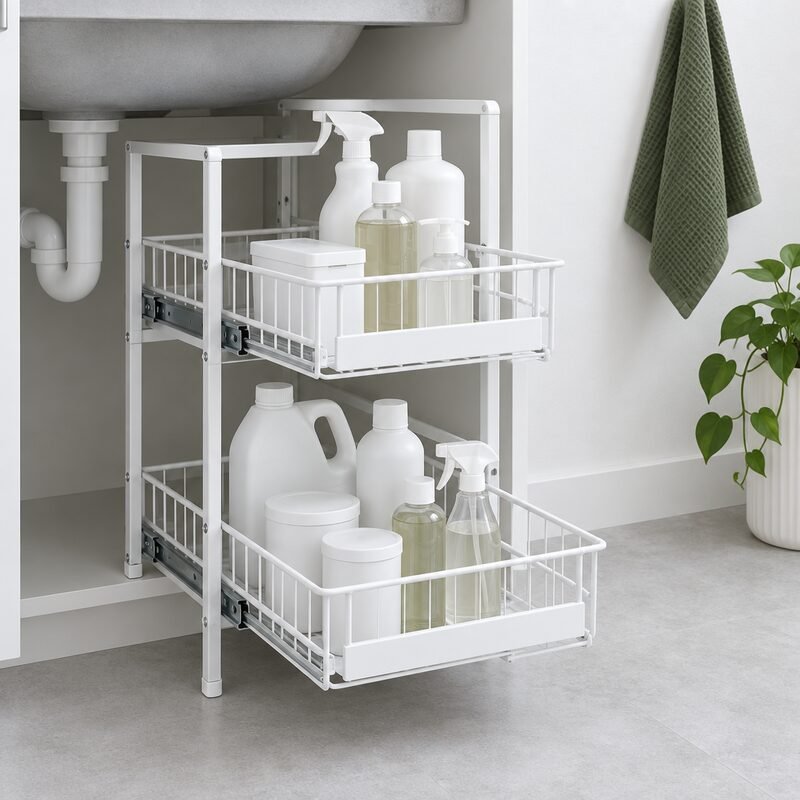
Sliding shelves bring the back of the cabinet to you. The two-pack covers both sides of the drain pipe.
View on Amazon Add to Amazon cart 🛒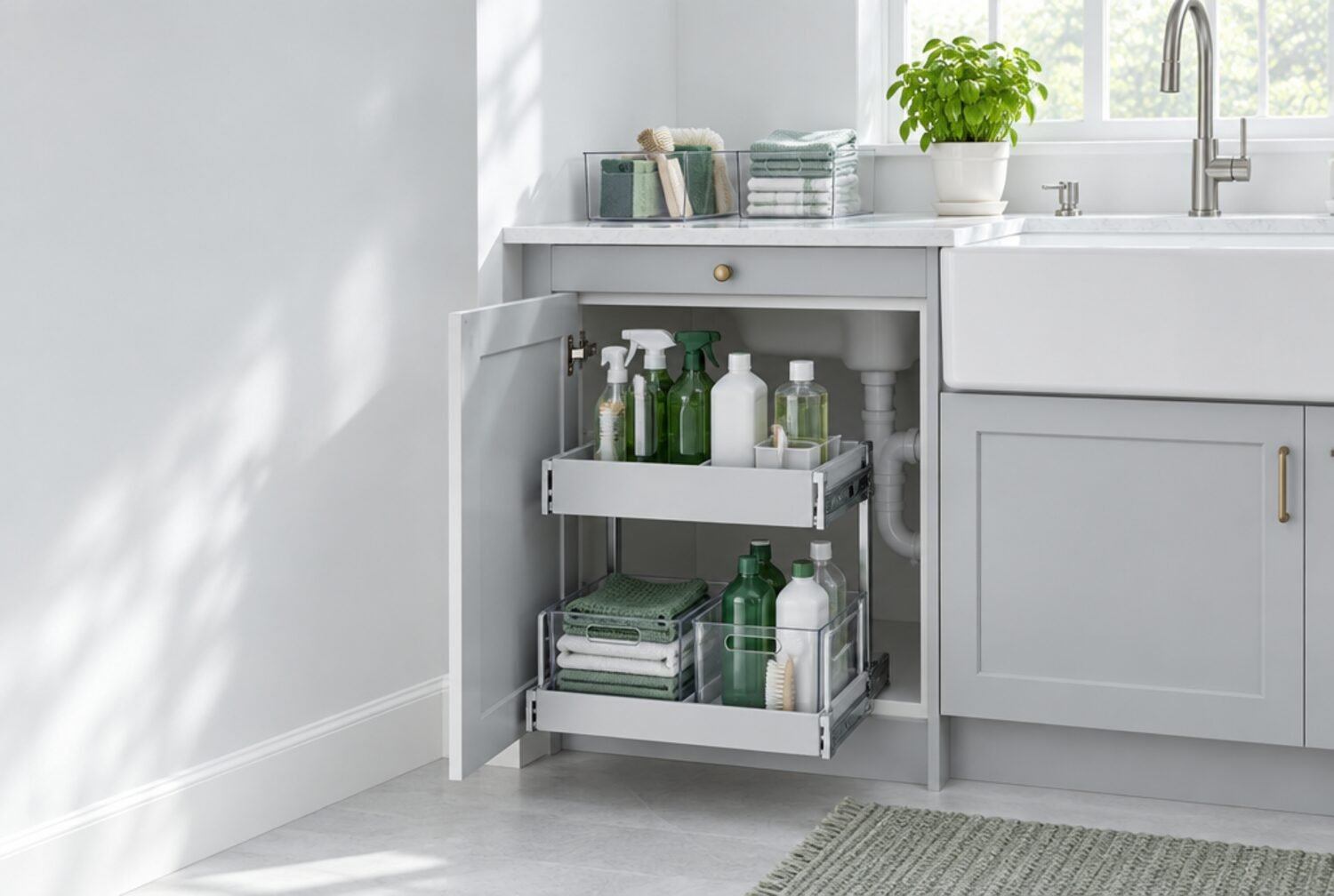
The organizer featured in our videos. Two pull-out tiers keep cleaning supplies within reach under the sink.
View on Amazon Add to Amazon cart 🛒Use drawers or small bins on the narrow side
The side with less room suits small clear drawers or bins: cotton pads, travel sizes, spare toothbrushes. Clear sides let you see when something is running low.
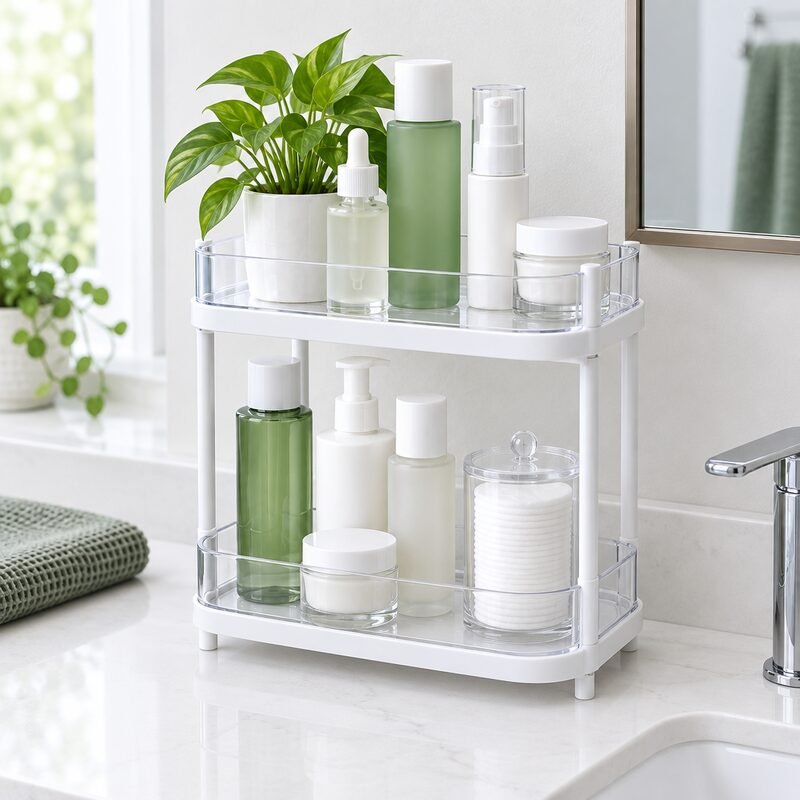
Clear drawers keep small daily items off the counter, and the plastic wipes clean with soap and water.
View on Amazon Add to Amazon cart 🛒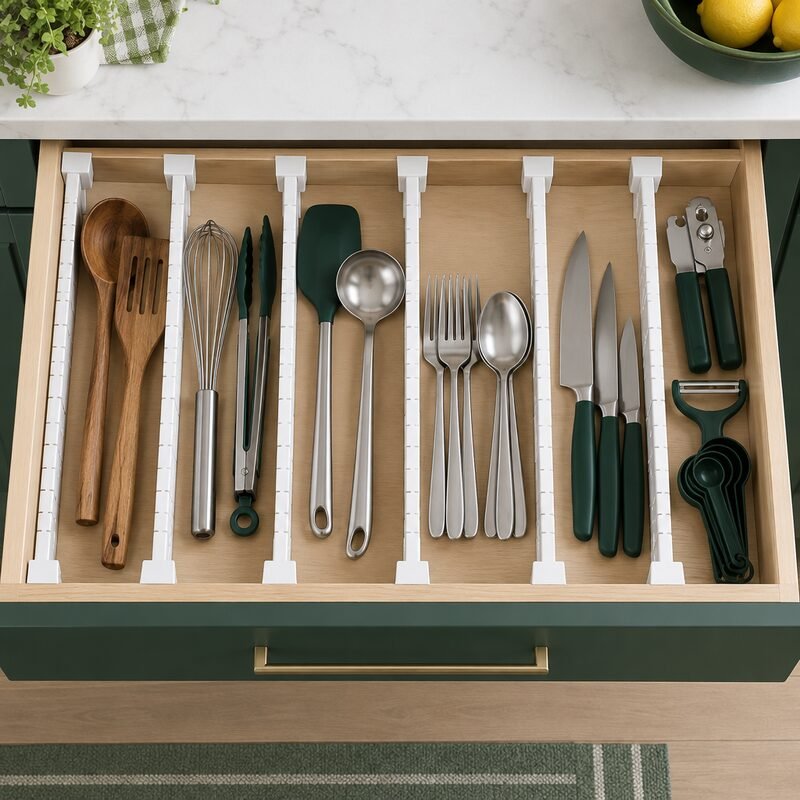
Four tray sizes that tile together, so a shallow junk drawer gets a place for every small item.
View on Amazon Add to Amazon cart 🛒Group by task and keep the floor clear
Sort what is left into a few groups, such as hair, skin, first aid and cleaning, and give each group one bin. Keep heavy bottles low and toward the front.
Once a month, empty the cabinet, wipe the floor and check under the pipe for drips. It takes five minutes and keeps the organizers dry.
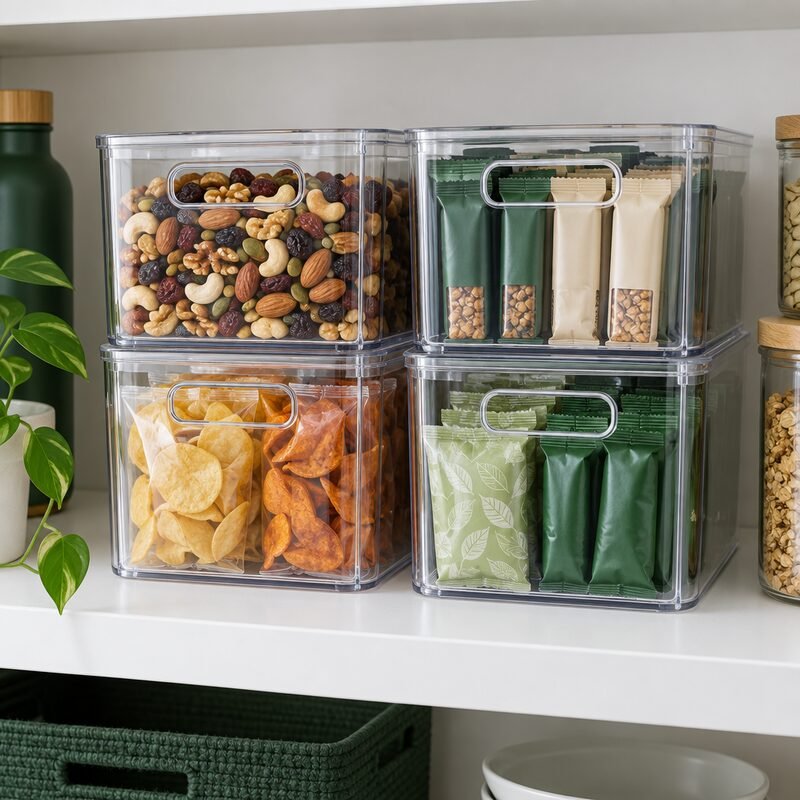
A mix of sizes for snacks, packets and produce. Clear walls show what is running low.
View on Amazon Add to Amazon cart 🛒Typical vanity sizes and what fits
| Vanity width | Usable width per side (rough) | Good fit |
|---|---|---|
| 18 to 24 inches | 4 to 7 inches | Slim pull-out tier or narrow bins |
| 30 inches | 8 to 10 inches | A two-tier sliding unit on one side, drawers on the other |
| 36 inches and up | 10 inches or more per side | Two sliding units or stacked drawers |
Actual space depends on where the drain and supply lines sit, so measure your own cabinet before buying.
What to keep here and what to move
- Good here: backup toiletries, toilet paper in a closed bin, cleaning supplies in a carry caddy, hair tools once fully cool.
- Better elsewhere: medicines (heat and humidity can affect them), extra towels that may absorb moisture, and anything that should not get wet.
- Keep reachable: the water shut-off valves, so you can turn them off quickly in a leak.
Leak-proof the cabinet
- Lay a waterproof liner or a shallow tray on the cabinet floor.
- Keep organizers raised slightly on feet or a tray so a small drip does not soak into bins.
- Once a month, run the tap and check the trap and supply lines with a dry paper towel.
- If the cabinet floor is already swollen or soft, fix the leak before adding organizers.
Child and pet safety
Cleaning products under a bathroom sink are within easy reach of small children and pets. If you have either, use a cabinet latch and keep products in their original labeled containers. Never mix bleach with ammonia-based or acidic cleaners.
Under sink storage around pipes: a 5-minute measuring checklist
Most organizers that "don't fit" fail by an inch or less. Write these five numbers down before you shop, and compare them with the product dimensions on the listing.
- Left width: from the left cabinet wall to the closest edge of the drain pipe.
- Right width: from the right cabinet wall to the closest edge of the drain pipe. The two sides are often different.
- Depth: from the back wall to the inside of the door, then subtract the depth of anything mounted on the door and any hinge that sticks out.
- Clear height under the trap: from the cabinet floor to the lowest point of the U-shaped P-trap. Anything that slides under the trap must be shorter than this.
- Face frame opening: the width of the opening between the cabinet frame edges. An organizer can fit inside the cabinet and still be too wide to get through this opening.
Leave about half an inch of play on each measurement so drawers slide without rubbing the pipe, and keep the shut-off valves reachable.
| What you measured | What usually works | What to skip |
|---|---|---|
| One side is narrow (a few inches) | A slim single-tier pull-out or a tall narrow bin for spray bottles | Two-tier units that are wider than the gap |
| Low clearance under the trap | Flat, shallow bins that slide under the pipe | Anything taller than your trap height measurement |
| Deep cabinet, short arms | Sliding drawers so items come to you | Fixed shelves where things get lost at the back |
| Pipe runs up the middle | Two matching organizers, one per side | One wide unit that must straddle the pipe |
| Door has room on the inside | A shallow door caddy for brushes or small bottles | Deep door racks that hit the pipe when the door closes |
For the kitchen sink base, the same measurements apply; see under-sink organizers that fit around pipes.
Frequently asked questions
How do I organize a vanity with no shelf?
Use stackable clear drawers on one side and a slim sliding tier on the other. Hooks on the inside of the door can hold a hair dryer cord or brushes.
Can I store towels under the sink?
It is better to keep towels in a drier spot. If you must, use a closed bin and check it for dampness.
What is the best way to measure around a P-trap?
Measure the width on each side of the pipe and the height from the floor to the lowest point of the trap, then shop for organizers smaller than those numbers.
Do pull-out organizers work around a bathroom drain?
Yes, if each one fits its own side. Measure left and right of the pipe separately and buy two narrow pull-outs rather than one wide one.
How do I keep the area under the pipe from going to waste?
Use a low, flat bin that slides under the trap for refills or spare sponges, and check the clear height first.